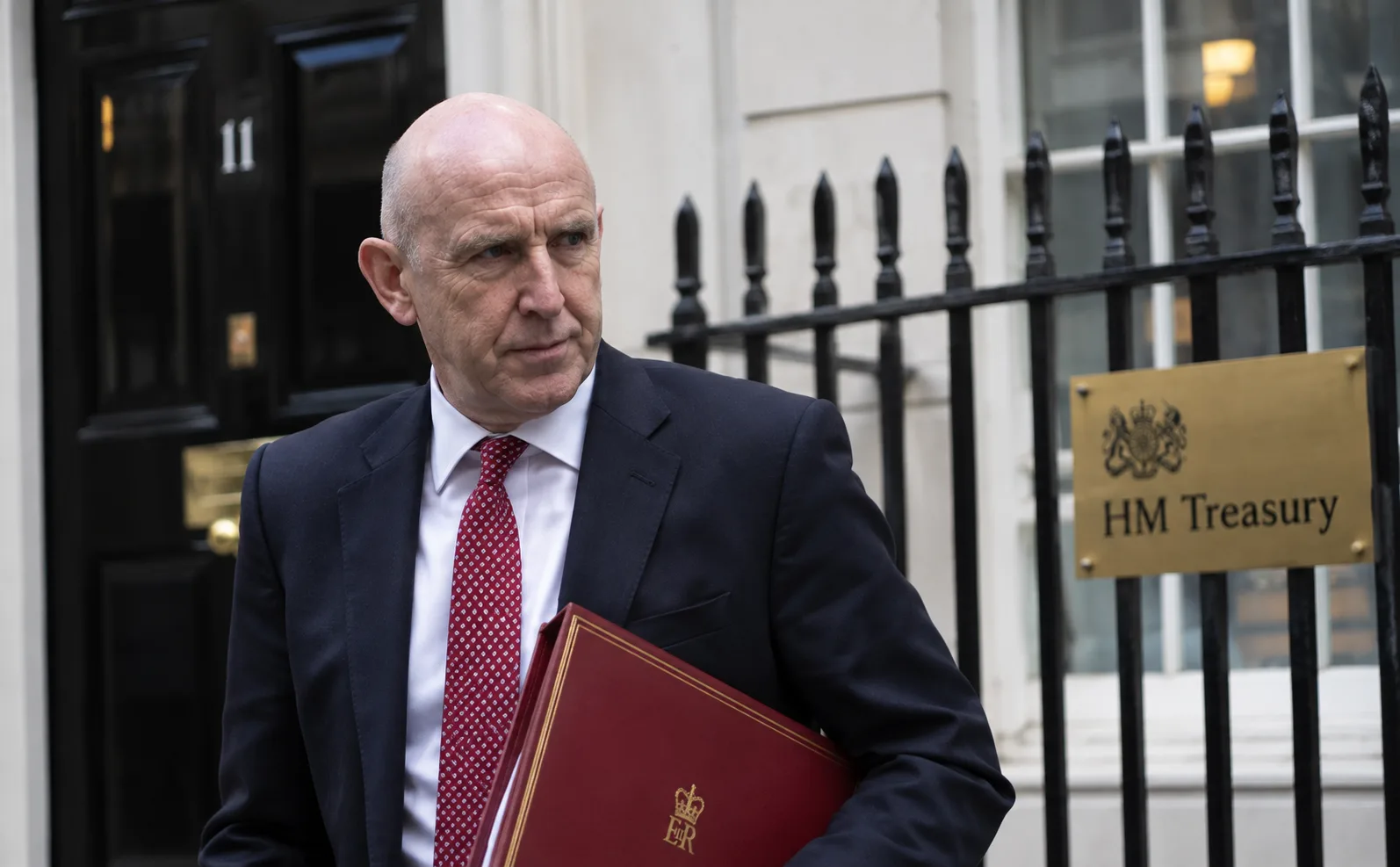
The International Monetary Fund has warned governments against across-the-board cost-of-living subsidies, saying any support must be "temporary, targeted and non-distortionary", two weeks before John Healey delivers his first Budget as Chancellor on 28 October.
The fund's latest World Economic Outlook, published on 13 October at its annual meetings in Bangkok, found that targeted, temporary transfers offer the most cost-efficient protection for vulnerable households, while measures that suppress prices can require three to twenty-two times more fiscal resources. It said an "urgent" need to bring down borrowing meant cost-of-living help should be used "sparingly" in all countries, and that the fund did not single out the UK or name any domestic policy.
In its forecast update, the fund raised its estimate for UK growth in 2026 to 1.3 per cent, from the 1 per cent it projected in July, but lowered its estimate for 2027 to 1.2 per cent. It said growth would "edge down" next year as "higher energy prices and long-term interest rates weigh on consumption and investment". UK inflation is expected to average 3.3 per cent this year and 2.8 per cent in 2027, above the Bank of England's 2 per cent target.
Silvana Tenreyro, the IMF's chief economist and a former member of the Bank's Monetary Policy Committee, said the UK "stands out" among the G7 for having begun to narrow its deficit. "The UK has already started the consolidation process," she said. "The message for the UK is simply, stay the course." The fund projected that Britain would have the lowest annual borrowing in the G7 by 2031.
The guidance follows a run of cost-of-living commitments from Andy Burnham's government since he became Prime Minister on 20 July. VAT on domestic electricity was cut from 5 per cent to zero for six months, from 1 October 2026 to 1 April 2027, a measure the Treasury estimates will cost £850 million in 2026-27 and save a typical household about £45 a year. A £2 cap on single bus fares in England outside London will return from 1 January for the rest of 2027, at a cost the government puts at more than £500 million and funds in part by converting £400 million of international climate finance into loans. The VAT cut is temporary but available to all households; the IMF's recommendation concerned subsidies applied broadly and indefinitely, and the fund did not assess these measures.
Mr Healey has said the Budget will give households and businesses "breathing space", and the Treasury is drawing up a targeted energy support scheme limited to benefit claimants. The Chancellor is also under pressure to continue three inherited measures of relief. Fuel duty rates have not been raised since 2011, when George Osborne cancelled that year's planned increase in his 2011 Budget, and the rate was cut by 5p a litre in 2022. Government policy remains that fuel duty should rise each year with the retail prices index, but the upratings have been cancelled every year since. The Office for Budget Responsibility calculated that the freezes had forgone about £120 billion of revenue between 2011 and October 2024, measured against that uprating path rather than as direct spending. Rachel Reeves, Mr Healey's predecessor as Chancellor, froze regulated rail fares in England for a year, the first full freeze since 1996, and held the NHS prescription charge at £9.90, in her November 2025 Budget. The £2 bus cap itself was introduced by the previous Conservative government in January 2023 and raised to £3 under Sir Keir Starmer's administration before Mr Burnham restored it.
The Resolution Foundation said the Chancellor should "make repairs" to the public finances while giving well-targeted help to households "struggling to heat their homes". In August the think tank proposed a discount of up to £175 a year for low-income households, at a cost of £2 billion, reaching 40 per cent of households and more than four-fifths of the poorest families. The Institute for Fiscal Studies warned that the Budget would be "a work of fiction" unless Mr Healey set out how he would handle £35 billion of future spending pressures.
Andrew Bailey, the Governor of the Bank of England, said on 8 October that fiscal policy "must be credible and be seen as such by financial markets", as the yield on 10-year gilts rose to 5.515 per cent, its highest level since July 2007. The IMF's own data put UK general government debt above 100 per cent of GDP, and the fund warned that highly indebted economies are increasingly exposed to bond market shocks.
Responding to the IMF's outlook, Mr Healey said: "Conflict in the Middle East and Europe is hitting people in the UK and around the world. But Britain's economy is showing strong international resilience in the face of these challenges: we're forecast to be the joint second fastest growing G7 nation in 2026 and have the lowest deficit in the G7 by 2031. This week I will meet international finance ministers in Bangkok to discuss how we limit the impact of the conflicts on people and businesses, while maintaining strong fiscal discipline."
Commenting on the forecasts, Andrew Griffith, the shadow chancellor, said: "The IMF have downgraded growth due to high energy costs and escalating borrowing. John Healey must tackle both in the Budget by getting Britain drilling in the North Sea and gripping out-of-control welfare spending."
Robert Jenrick, the Reform economy spokesman, warned that Britain was "going bust". He said: "Anyone with a brain cell knows we have to cut wasteful spending. The only way to get the economy going again is to lower taxes on workers and businesses."
Great British PAC reaction
Richard Thomson, former Royal Marine and National Director of Great British PAC said:
„The IMF is warning Labour two weeks before John Healey’s first Budget: stop the blanket subsidies, control spending and target support properly.
We have seen this film before.
In 1976, a Labour government drove Britain into the arms of the IMF. The Chancellor responsible was Denis Healey. Fifty years later, another Healey is presiding over an economy heading in the wrong direction.
Growth for 2027 has already been downgraded. Welfare spending is surging. Debt interest is swallowing over a hundred billion pounds, while Labour continues taxing, borrowing and spending without reform.
John Healey must change course on 28 October.
Otherwise, the name Healey may once again become synonymous with Labour economic failure - and Britain going cap in hand to the IMF.“