
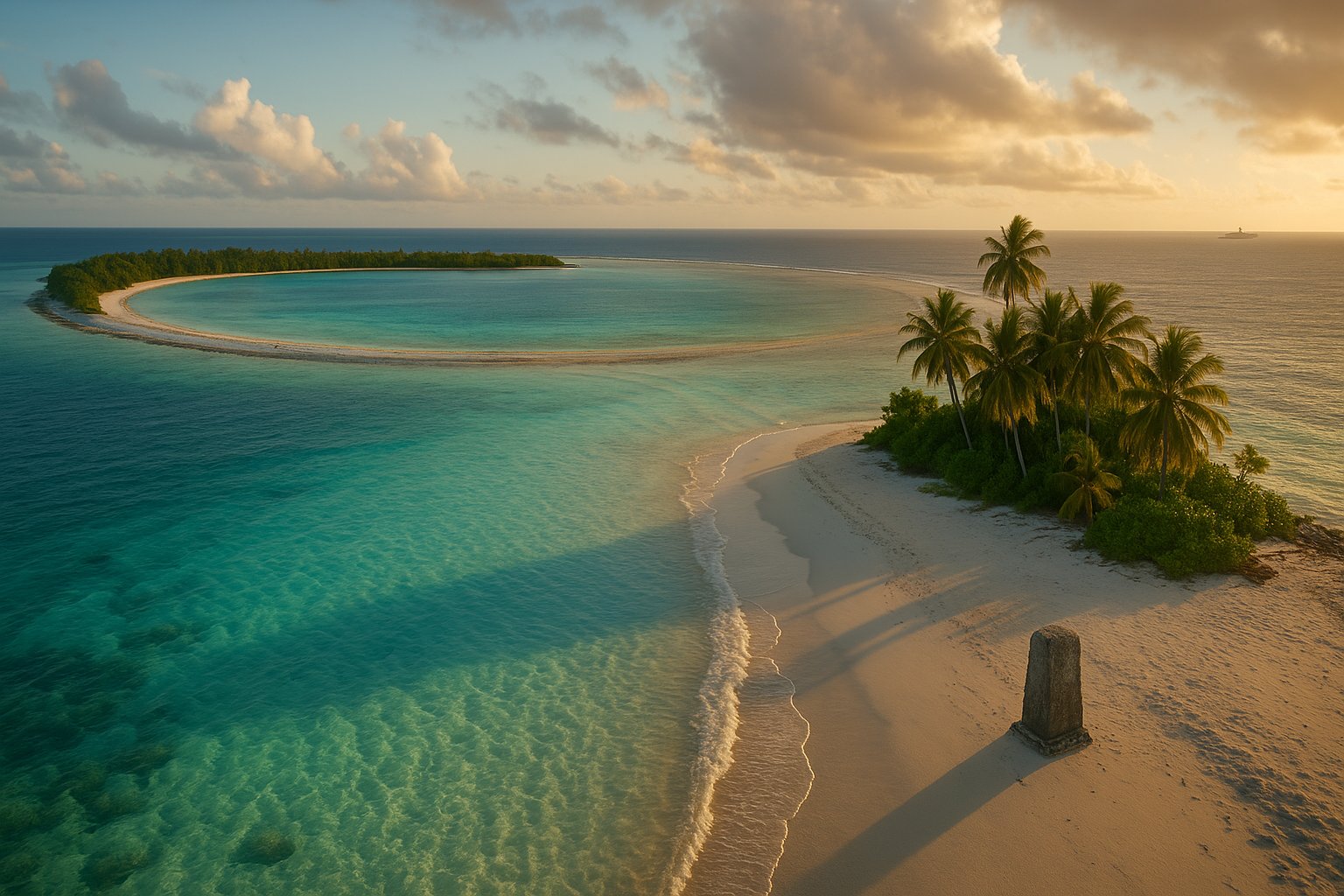
The case for handing the Chagos Islands to Mauritius rests on a frozen view of colonial borders that international law itself ranks below the right of a people to choose their own future. The Chagossians are entitled to decide what happens to them, exactly as other peoples were allowed to do in earlier decolonisations that Britain helped to deliver. The Mauritius Treaty pushes those rights aside and manufactures fresh dangers in the process. That is the argument set out here by Dr Dan Boucher.
In an earlier piece, ‘The Chagos Treaty – And the New Colonialism’, I took on the case advanced by the Republic of Mauritius – supposedly backed by international law – for the ‘return’ of the Chagos Islands and the ‘completion’ of the decolonisation of the former colony of Mauritius, which the Mauritius Treaty openly sets out to achieve.
The Mauritian claim runs as follows: international law, as expressed in the UN Declaration on Decolonisation, UN Resolution 1514 (XV), means that a colonial power must not redraw the boundaries of a colony before granting it independence.
On this reading, every colony has to be decolonised as a single whole. Britain, it is said, failed that test. Sixty years ago the UK convinced the then Mauritian Council of Ministers that Mauritius itself should move towards independence while the Chagos Islands were hived off into a separate, smaller colony to accommodate a US military base. The Mauritians did not merely agree – they accepted a substantial payment, £3 million (around £70 million in today’s money), in compensation. Yet they later contended that this consent counted for nothing. Their reasoning was that, since international law forbids altering the territorial integrity of a colony, it made no difference that the change was agreed by the Mauritians rather than forced on them by the colonial power; their consent, they argued, should simply be set aside.
In a non-binding advisory opinion in 2019, the International Court of Justice sided with Mauritius. On this basis it is claimed that the proper course is to ‘return’ the Chagos Islands to Mauritius so that decolonisation can at last be finished.
Prioritising Territorial Integrity over Self-Determination?
The difficulty is that this whole line of reasoning rests on a one-sided understanding of decolonisation. The rule against a colonial power redrawing a colony’s boundaries before independence does not exist because the colonial power is presumed to have been especially wise in fixing those boundaries in the first place. It exists to make sure that, in handing over self-government, the colonial power does not pre-empt or limit in any way the people’s self-determination – and international law freely accepts that self-determination can itself change a territory’s integrity.
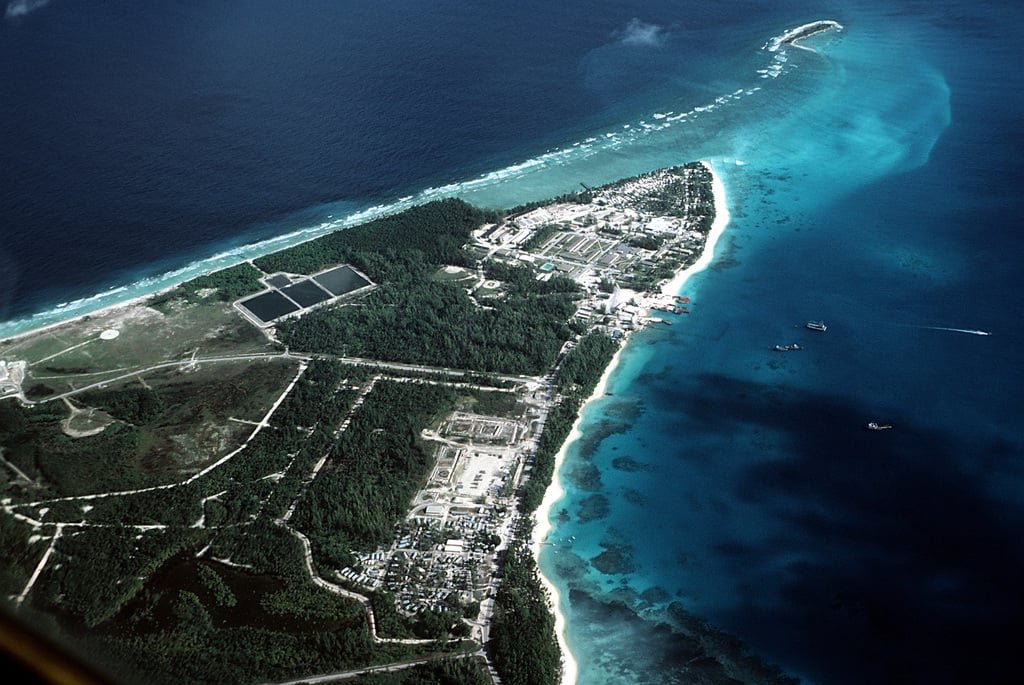
To grasp why self-determination outranks territorial integrity in decolonisation, it helps first to notice that this ordering is general – it is not unique to decolonisation at all. The break-up of Czechoslovakia makes the point well: its people self-determined to alter their own territorial integrity and form two separate sovereign states, the Czech Republic and the Slovak Republic, entirely outside any colonial context. Turning to decolonisation specifically, two further observations follow.
First, the practice of international relations during decolonisation shows that a colony’s territorial integrity is not frozen for all time. The colony of India, for instance, was not kept intact on independence but divided, through self-determination, into India, Pakistan and Bangladesh.
Second, international law – set out in UN Resolution 567 (VI), Resolution 648 (VII) and Resolution 742 (VIII) – makes plain that decolonisation must be understood as part of a process of self-determination in which the people or peoples of a territory may keep their colonial borders or change them. These resolutions were drafted chiefly to test the genuineness of attempts by newly decolonised polities to attach themselves to a former colonial power or another state, but they bear directly on our case. By raising doubts about the validity of territorial integrities that involve geographical separation and the joining of peoples with distinct and different ethnic profiles, they set out principles that necessarily put in question the validity of the borders of the pre-8 November 1965 colony as an act of free self-determination – and so the wisdom of resurrecting those borders sixty years on.
UN Resolution 742 (VIII), for example, effectively challenges the authenticity of territorial integrities in these terms:
‘Geographical considerations. Extent to which the relations of the Territory with the capital of the central government may be affected by circumstances arising out of their respective geographical positions, such as separation’ by land, sea or other natural obstacles.’
‘Ethnic and cultural considerations. Extent to which the population are of different race, language or religion or have a distinct cultural heritage, interests or aspirations, distinguishing them from the peoples of the country with which they freely associate themselves.’
Against that background, while no one can be certain what the whole of the pre-8 November 1965 colony would have chosen had it been given self-determination, it is hard to imagine a colony more likely to have split into two separate countries than this one. The gap between Mauritius and the Chagos Islands was a staggering 1,339 miles – roughly the distance from Kent to North Africa. And the two populations were different: the Chagossians were black and Christian, while the Mauritians were to a significant degree Indian and Hindu. On those grounds, there is a strong case that the pre-8 November 1965 territorial integrity, frozen in time and without any exercise of self-determination, can no more complete decolonisation than did the original creation of the British Indian Ocean Territory (BIOT).

The Problems with Refuting Self-Determination
When supporters of the Mauritius Treaty and the Diego Garcia Military Base and British Indian Ocean Territory Bill are pressed on the absence of any provision for Chagossian self-determination – even though Article 11 of the Treaty itself recognises the Chagossians, thereby conceding that they are not the same as the Mauritians – they reach for one of two replies. The more common one is that, while the forced removal of the Chagossians from their islands was very wrong and should never have happened, it now makes self-determination for the Chagossians in relation to the Chagos Islands impossible to apply. The alternative is to claim that the Chagossians are already represented: on the basis of the pre-8 November 1965 territorial integrity of the colony they are Mauritians, and since their forced removal some Chagossians live in Mauritius, so they enjoy self-determination as part of Mauritius.
Neither argument holds up.
Taking the second first, it is simply not credible to suggest that the Chagossians now exercise self-determination as part of Mauritius.
For one thing, most Chagossians do not live in Mauritius, and the number who do is falling rather than rising. Beyond that, the informal Chagossian referendum that has been held, in which 3,056 Chagossians took part, recorded 99.16% support for self-determination – not to become part of Mauritius, but to be a largely self-governing British Overseas Territory along the lines of Anguilla or Montserrat.
For another, the idea of folding Chagossians into the category of Mauritians is deeply distressing to many of them, because the Mauritians were in effect party to their forced removal from the Chagos Islands, agreeing that the Chagossians should be expelled to Mauritius, where they have largely endured a second-class citizenship. The 1965 decision of the Mauritian Council of Ministers might be treated as void in so far as it agreed to the removal of the Islands; but in so far as it agreed to help facilitate the forced removal of Chagossians from the Chagos Islands to Mauritius, it cannot be regarded as without consequence. That is precisely why so many Chagossians find it impossible to locate their self-determination within a Mauritian identity – just as they could not do so within a British one. They may self-determine to be part of the Republic of Mauritius or to be a British Overseas Territory, but their self-determination must now be theirs and theirs alone.
The other claim – that the forced removal of the Chagossians, wrong though it was, now cancels any moral duty to give them self-determination – is extraordinary, and could only be sustained logically if the Chagossian people had died out. They have not. This people in exile has a growing population, living mostly in just three countries: the UK, the Seychelles and Mauritius. A self-determination referendum for them would be entirely feasible, and, as the KPMG report on resettling the Chagos Islands makes clear, it would be cheaper to resettle the islands than for the UK Government to hand them to Mauritius and then lease Diego Garcia back for 99 years. Given these clear options, choosing in 2025 not to facilitate Chagossian self-determination – and justifying that by what happened between 1968 and 1973 – does not make amends for the original wrong but ratifies it, tying the present generation to the failures of those who came before and heaping fresh shame on the United Kingdom.
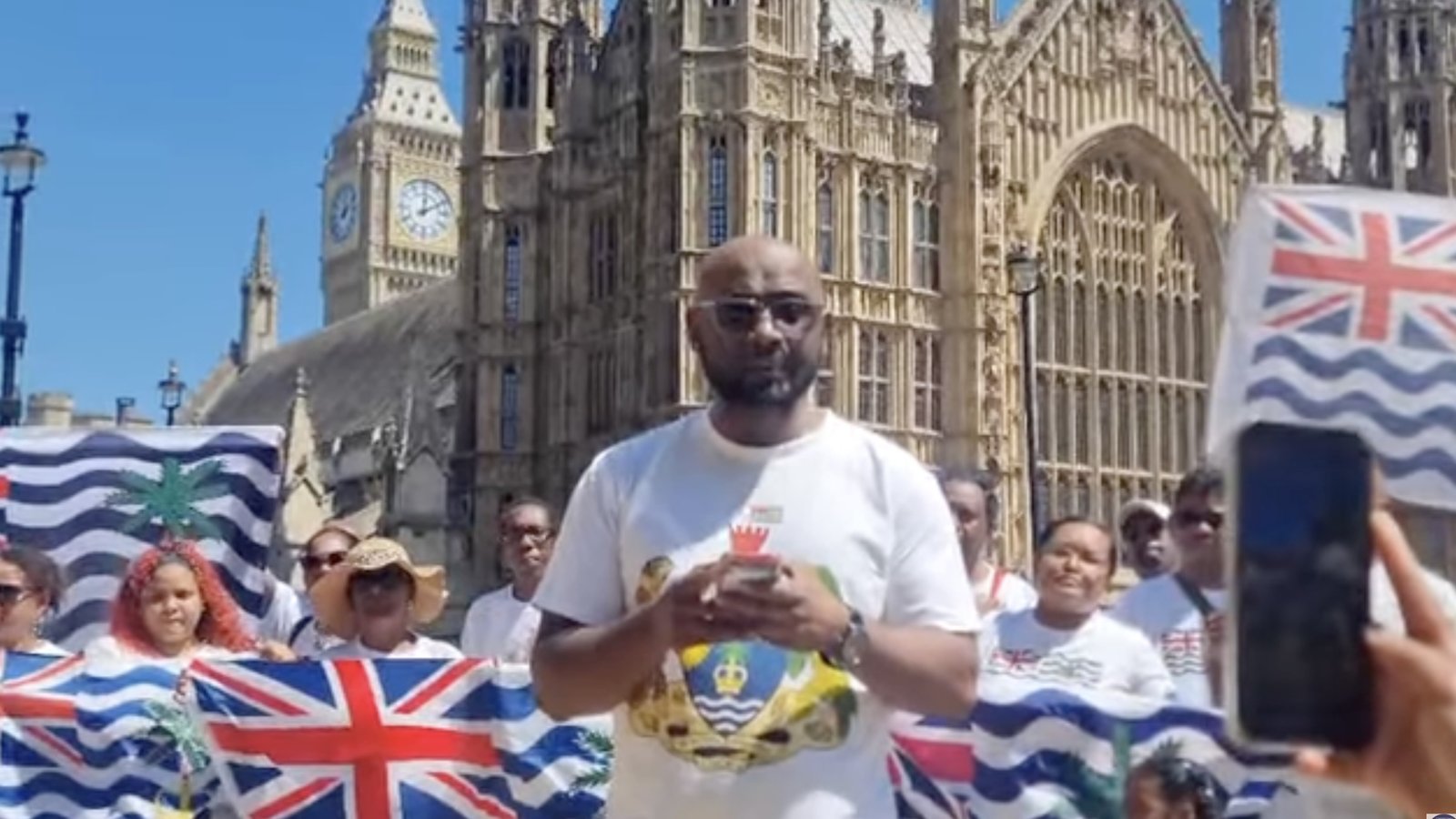
Mauritian Delivery of Self-Determination?
To see the full scale of the problems with the Mauritius Treaty and the Diego Garcia Bill, two further realities have to be faced.
First, although the Treaty has the UK paying the Republic of Mauritius more than it would cost the UK to resettle the Chagos Islands itself, it does not actually bind the Mauritians to resettle them. Resettlement is mentioned only as a possibility.
Second, and more seriously, even that possibility has been cast into doubt over the past month by revelations that, in order to raise its flag over the Chagos Islands, Mauritius will have to be carried there by the Indian Government – for the straightforward reason that it has no suitable vessel of its own. In international relations, recognising a state does not demand that it wield great or unusual power, but it does require the capacity to govern itself, or it risks becoming a ‘failed state’ or one run by someone else. If the Republic of Mauritius cannot even reach the Chagos Islands under its own steam to hoist its flag, it is hard to see how it could resettle and govern islands 1,339 miles away.
Further Challenges
To draw out what these questions of capacity really mean, two more difficulties deserve attention.
1. Leasing Other Islands
Media reports suggest that, rather than concentrating on resettling the Chagos Islands with Chagossians, the Republic of Mauritius is more interested in opening up new income streams by leasing these strategically valuable islands to other countries. It has been widely reported that India has struck a defence deal with Mauritius to lease an island for a listening post. It is also said that, immediately after the Mauritius Treaty was signed, a Chinese delegation arrived in Port Louis to discuss, among other things, leasing an island. While the Treaty restricts how far other countries may use the islands for defence and security, it places no limits at all on Mauritius leasing other islands for other purposes – and once leased, it would be very hard to police what they are used for without risking war.
‘3. In accordance with this Agreement, in respect of the Chagos Archipelago beyond Diego Garcia, Mauritius agrees:
… d. except in circumstances of necessity for a response to a humanitarian emergency or natural disaster in instances where the United Kingdom or the United States of America is unable or unwilling to provide such a response, Mauritius and the United Kingdom shall jointly decide on authorisations permitting the presence of non-United Kingdom, non-United States or non-Mauritian security forces, either civilian or military.’
2. UN Resolution 742 (VIII)
One trouble with trying to freeze the pre-8 November 1965 territorial integrity in time is that it forces us to behave as though tomorrow were 9 November 1965 rather than 9 November 2025, which is what it actually is. The Chagos Islands should not have been separated from the rest of the pre-8 November 1965 colony in the way they were – but they were, and they have now been functionally separate for sixty years. With Mauritius lacking the capacity described above, it is difficult to set aside this principle in UN Resolution 742 (VIII), bearing in mind that the capital of the polity into which it is proposed the Chagos Islands be absorbed is Port Louis, 1,339 miles away: ‘Geographical considerations. Extent to which the relations of the Territory with the capital of the central government may be affected by circumstances arising out of their respective geographical positions, such as separation’ by land, sea or other natural obstacles.’
The Tuvulan Precedent
The full weight of the difficulty facing the UK Government’s defence of the Mauritius Treaty and the Diego Garcia Bill only becomes clear once we confront the precedents flowing from the higher standards Britain has set itself since 1973. Mauritius was not the only former British colony to embrace two separate groups of islands, divided by a great distance and inhabited by people of different ethnicities. The Gilbert and Ellice Islands posed Britain a very similar decolonisation challenge – and there, instead of blocking decolonisation by raising a frozen idea of territorial integrity above self-determination, the UK showed how to honour both the rule that a colonial power must not alter a colony’s borders for its own ends immediately before independence and the duty to deliver decolonisation and self-determination, with the result that the people concerned changed the territorial integrity of the former colony.
Like the Chagos Islands, the Ellice Islands lay a very long way from the larger and more populous Gilbert Islands, though the gap – just over 800 miles – was actually smaller than the 1,339 miles between the Chagos Islands and Mauritius. The two groups also held two distinct ethnic communities. The Ellice islanders were Polynesian, while the more numerous Gilbert islanders were Micronesian – much as the Chagossians were Africans while the Mauritians (before the forced removal of the Chagossians) were to a large degree Indian.
Rather than redrawing the borders of the colony of the Gilbert and Ellice Islands ahead of decolonisation for its own purposes, the UK Government discussed independence with the islanders without any fixed agenda. In the course of those talks it emerged that the representatives of the Ellice Islands were anxious about being placed in a new sovereign state made up of both the Ellice and Gilbert Islands, fearing they would be overshadowed by the far more numerous Gilbert islanders and that their voice and concerns would be lost. Britain responded by holding a self-determination referendum for the people of Ellice in 1974, in which they voted to separate from the Gilbert Islands by 3,799 votes to 293. The UK Government then worked with the islanders to give effect to that decision: the Ellice Islands first became a separate colony in 1976, then an independent sovereign state in 1978 named Tuvalu, while the following year the Gilbert Islands became the independent Republic of Kiribati.
The lesson is that there is no objection in principle to changing a colony’s territorial integrity before decolonisation. The point is only that the initiative cannot come from the colonial power; it must come from the people of the territory. Indeed – a point now largely forgotten – the non-binding advisory judgement of 2019 itself makes clear that there would have been no problem with separating the Chagos Islands from Mauritius had that change resulted from a valid exercise of self-determination through a referendum.
‘The Court considers that the peoples of non-self-governing territories are entitled to exercise their right to self-determination in relation to their territory as a whole, the integrity of which must be respected by the administering Power. It follows that any detachment by the administering Power of part of a non-self-governing territory, unless based on the freely expressed and genuine will of the people of the territory concerned, is contrary to the right to self-determination.’
Britain’s conduct over the Gilbert and Ellice Islands matters enormously for Chagossians who reject the Mauritius Treaty and the Diego Garcia Bill and who seek their own self-determination.
First, by providing a case of a colony embracing two groups of islands divided by vast distance and ethnicity, it tells us – mindful of UN Resolution 567 (VI), Resolution 648 (VII) and Resolution 742 (VIII) – that it would have been no surprise had the self-determination of the pre-8 November 1965 colony produced two separate entities, so that it is disingenuous and wrong to claim decolonisation can now be completed by assuming that colony’s territorial integrity frozen in time. More than that, given this close comparator, such an outcome is exactly what we should expect. The presumption that completing decolonisation would alter the pre-8 November 1965 territorial integrity must in fact be even stronger than for the Gilbert and Ellice Islands, for two reasons. First, the distance between Mauritius and the Chagos Islands is greater than that between the Gilbert and Ellice Islands. Second, the risk of Chagossians being overshadowed by Mauritians is greater than the risk of Ellice being overshadowed by Gilbert, given how many more Mauritians there are than Chagossians.
Set against the legal implications of UN Resolution 567 (VI), Resolution 648 (VII) and Resolution 742 (VIII), and the precedent set – not by some other colonial power but by the UK itself – over the Gilbert and Ellice Islands, together with the facts that (i) a robust self-determination referendum for the Chagossians is technically possible, (ii) resettling the islands would be cheaper than giving them to Mauritius and then leasing Diego Garcia, (iii) the Republic of Mauritius has not committed to resettle the Chagos Islands, (iv) the Republic appears to lack the capacity to do so, and (v) seems more interested in leasing the islands than in helping complete decolonisation, the Mauritius Treaty and Diego Garcia Bill look completely indefensible.
Legal Certainty and a Better Chance?
At this stage, supporters of the Treaty and the Bill will retreat to their final defence, leaning on the support of the United States of America for the Treaty and the backing of some Chagossians.
1. US Support?
American support rests on two things. First, it is a very good deal for the United States, in that London, not Washington, pays for Diego Garcia. Second, the US has been worried about the legal uncertainty hanging over its base on Diego Garcia. Because the sovereign power hosting that base, the UK, has not rejected the Mauritian claims to the Chagos Islands but has effectively endorsed them, the Americans have understandably grown unsure about the future of the base and have paused investment in it. On this footing, the UK Government argues that the Mauritius Treaty – handing the islands to Mauritius and then leasing back Diego Garcia – completes decolonisation and secures legal certainty for the base. That argument is now plainly flawed in two ways.
First, as this article shows, the Mauritius Treaty is not the only route to the legal certainty required. That certainty could equally be achieved by completing decolonisation through self-determination for the Chagossian people, without prejudging whether they would choose to join the Republic of Mauritius or form a separate polity. Either result would supply the necessary legal certainty. Were they to opt to become a largely self-governing British Overseas Territory, as seems likely, the outcome would be no more contested in international law than the legal standing of Tuvalu, separated from what is now the Republic of Kiribati. And in that case there would be no question of other islands being leased to rival powers in a way that could threaten international instability.
Second, an agreement that delivered self-determination for the Chagossian people would actually offer greater legal certainty than the Mauritius Treaty, precisely because the Treaty fails to provide for Chagossian self-determination. If the Treaty is ratified then, despite the attempt in clause 4 of the Diego Garcia Bill to remove the ongoing basis for Chagossian identity in the UK by replacing British Overseas Territories Citizenship for Chagossians with British citizenship, the Chagossians – a growing nation in exile – will not disappear. They will almost certainly acquire some form of international personality, calling the Mauritian claim to the Chagos Islands into question and creating further legal uncertainty for the United States.
2. Chagossian Support?
On the support of some Chagossians for the Mauritius Treaty, two points should be made. First, it would be most unusual for any act of self-determination to see every Chagossian vote the same way. As the Ellice Islands showed, some voted to stay joined to the Gilbert Islands. Second, after many years in which no progress has been made on resettling the Chagos Islands, it is unsurprising that some Chagossians have concluded that their access to the islands under Mauritius could hardly be worse than what Britain has so far offered, and have cautiously backed the Treaty. But the point of this article is that, while the Mauritian case for taking the Chagos Islands rests entirely on territorial integrity frozen in time – so that Mauritius is neither facilitating Chagossian self-determination nor committing to resettle the islands – the UK’s own options are now narrower than they appear. The only way the UK could lawfully keep its sovereignty over the islands within international law would be to provide the Chagossians with self-determination and resettle the islands. With that in mind, and mindful of the Tuvulan precedent, Chagossians who have been persuaded to support the Mauritius Treaty might wish to think again.
The Way Forward
If the Government wants to advance its Diego Garcia Bill in the Lords – and it must do so, with the legislation becoming law, in order to ratify the Mauritius Treaty – it will have to table a motion to commit the Bill to Committee Stage. At that moment the Conservatives will be able to re-table their amendment to the motion, requiring that Committee Stage not begin until after a 30-day consultation with the Chagossians. In the debate that follows, the international-law arguments around self-determination – UN Resolution 567 (VI), Resolution 648 (VII) and Resolution 742 (VIII) – and the precedent set by Britain’s own past conduct as a colonial power over the Ellice and Gilbert Islands will be of enormous importance. In the end the House of Lords has the power to save the United Kingdom from the great dishonour of this Treaty, because if it refuses to pass the Bill at Third Reading the Mauritius Treaty cannot be ratified. The Government might then invoke the Parliament Act and seek ratification in the next session. That, however, would buy thirteen precious months in which to shine more light on the injustices of both the Mauritius Treaty and the Diego Garcia Bill and to press the case for an alternative.
By Dr Dan Boucher.