
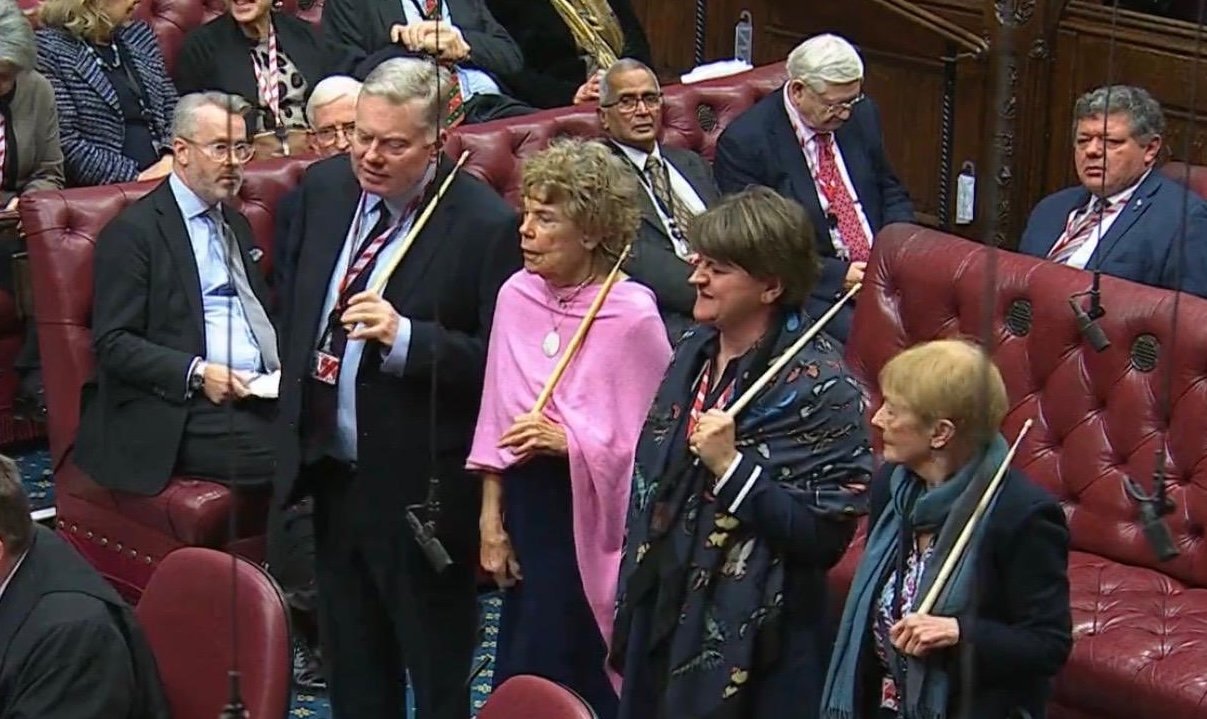
Sir Keir Starmer's drive to surrender the Chagos Islands to Mauritius ran headlong into Parliament last night, when the House of Lords broke the Government's timetable and demanded that key terms of the treaty be renegotiated. It is a serious blow to a deal our campaign has long argued was rushed through without proper regard for taxpayers, security or the Chagossian people.
During the Report stage of the Diego Garcia Military Base and British Indian Ocean Territory Bill, peers backed an amendment by 132 votes to 124 in a tightly contested division. The change would compel ministers to seek revisions to the treaty so that Britain could halt its payments to Mauritius should the Diego Garcia military base ever become unusable.
The vote pushes back ratification of the agreement and lays bare how widely the House distrusts a deal that, in the eyes of its critics, ties the United Kingdom into decades of enormous payments while offering scant protection for taxpayers, national security or the rights of the Chagossian people.
Signed by Sir Keir in May, the treaty hands sovereignty of the British Indian Ocean Territory to Mauritius and commits Britain to leasing back Diego Garcia, the site of a major British and American base, for 99 years. The bill is estimated at more than £30 billion, and some experts caution that it could climb as high as £35 billion across the life of the agreement.
The amendment that carried the day was brought forward by Lord Craig of Radley, a former Chief of the Defence Staff. He cautioned that, as written, the treaty obliged Britain to go on paying Mauritius even if environmental damage, military attack or a shift in geopolitics left the base unusable.
“There seems to be no break or conditional clause agreeing any reasons why the UK may cease these payments before the 99 year date is reached,” he told the House. Pointing to how quickly the strategic picture can shift, he added, “In well under the past 100 years, foes have become friends and friends, potential and real, have become foes.”
He pressed the point further, raising the possibility of rising sea levels, a devastating attack or a future American decision that the base was no longer required, and asking whether Britain would remain liable to pay in any of those cases. He also queried whether any legally binding agreement actually guaranteed American use of Diego Garcia for the whole of the lease.
“I do not wish to suggest any lack of importance of the base to national and international security at the present time,” he said. “But experience tells us that much can and does change over time.”
The amendment drew backing from every quarter of the House. Lord Houghton of Richmond, himself a former senior military commander, called it “no wider purpose than common sense” and warned that the very isolation and strategic worth of Diego Garcia could turn it into a tempting target in any future war.
“Pause for a moment to imagine the early stages of a global conflict,” he said, sketching out a scenario in which a hostile power could wipe out the base with almost no risk to civilians. “I cannot think of an obviously better or more considered target than Diego Garcia.”
Conservative peer Lord Hannan of Kingsclere charged ministers with failing to weigh obvious dangers as the deal was struck. He referred to reports that the treaty had been “championed by a small number of civil servants” and claimed that among those running the territory “there is no one who supports this treaty”.
Ministers nonetheless pressed peers to throw the amendment out. Speaking for the Government, Baroness Chapman of Darlington maintained that reopening talks with Mauritius would do more harm than good and risked damaging relations with allies.
“The US, which has invested heavily in Diego Garcia, agrees that opening up the possibility of the agreement with Mauritius being terminated early is not helpful,” she said. She pointed to a planned joint commission with Mauritius and argued that international treaty law already provided for termination where performance became impossible.
Citing the Vienna Convention, she reminded peers that international law allows a treaty to be ended where there is “the permanent disappearance or destruction of an object indispensable for the execution of the treaty”.
Those reassurances were not enough to sway the majority. Drawing his remarks to a close before pushing the matter to a vote, Lord Craig said, “I still feel that this is something which should and could be sorted out before we get into formal ratification,” and announced that he would test the opinion of the House. The outcome was an unmistakable rebuke to the Government.
Conservatives Call It an Abject Surrender
Opposition peers pounced on the result as evidence that Labour's Chagos policy is coming apart. Lord Callanan, leading for the Opposition, branded the treaty “an abject surrender” that had never been put to the public.
“The British people were not consulted on the treaty, yet it will see over £34 billion worth of taxpayers' money paid to the Government of Mauritius over the treaty's lifetime,” he said, setting that figure against statements from the Mauritian Prime Minister that the money would go towards paying down debt and cutting taxes at home.
“It is unconscionable that British taxpayers should be forced to continue to fund the Mauritian Government under the terms of the treaty in circumstances where the military base has become inoperable,” he added, committing Conservative votes to Lord Craig's amendment.
Anger Over the Treatment of the Chagossians
The debate also exposed growing fury at how the Government has treated the Chagossian people, who were forcibly cleared from their islands between 1968 and 1973 and remain scattered across the UK, Mauritius and the Seychelles. Time and again, peers rounded on Labour for forging ahead without any meaningful consultation or consent.
A recent survey by the House of Lords International Relations and Defence Committee drew more than 3,000 responses from Chagossians around the world. It found deep mistrust of Mauritius, strong backing for self-determination and broad opposition to handing over sovereignty without their say.
Lord De Mauley, who helped to run the survey, said respondents voiced a “profound and enduring sense of injustice” and a longing to return to their homeland. He noted that many, “despite the appalling treatment the British Government have meted out to these people”, still said they would rather remain under British sovereignty.
A number of peers also challenged the Government's rush to drive the Bill through Parliament while a judicial review remains live and unresolved. That case, brought by Chagossians and organised with the support of the Great British PAC, contests the lawfulness of the Government's conduct and the absence of consultation, with judgment expected shortly. Critics warned that completing the Bill before the court rules risks leaving the judicial review academic. As one peer put it, Parliament should be “slow to legislate in a manner that pre empts or undermines live judicial proceedings, particularly where those proceedings concern the rights of a specific identifiable group”.
For all the strength of last night's vote, Labour ministers are expected to move to reverse the amendment once the Bill returns to the Commons, where their large majority makes it likely MPs will restore the original wording.
Even so, the Lords have guaranteed delay and sharpened the pressure on Sir Keir Starmer over an agreement that a great many now consider reckless and ill-conceived. What the Prime Minister once cast as the only route to shield Diego Garcia from hostile influence looks ever more, to its critics, like a costly giveaway that weakens Britain's hand, betrays the Chagossians and saddles taxpayers with the bill for decades to come.