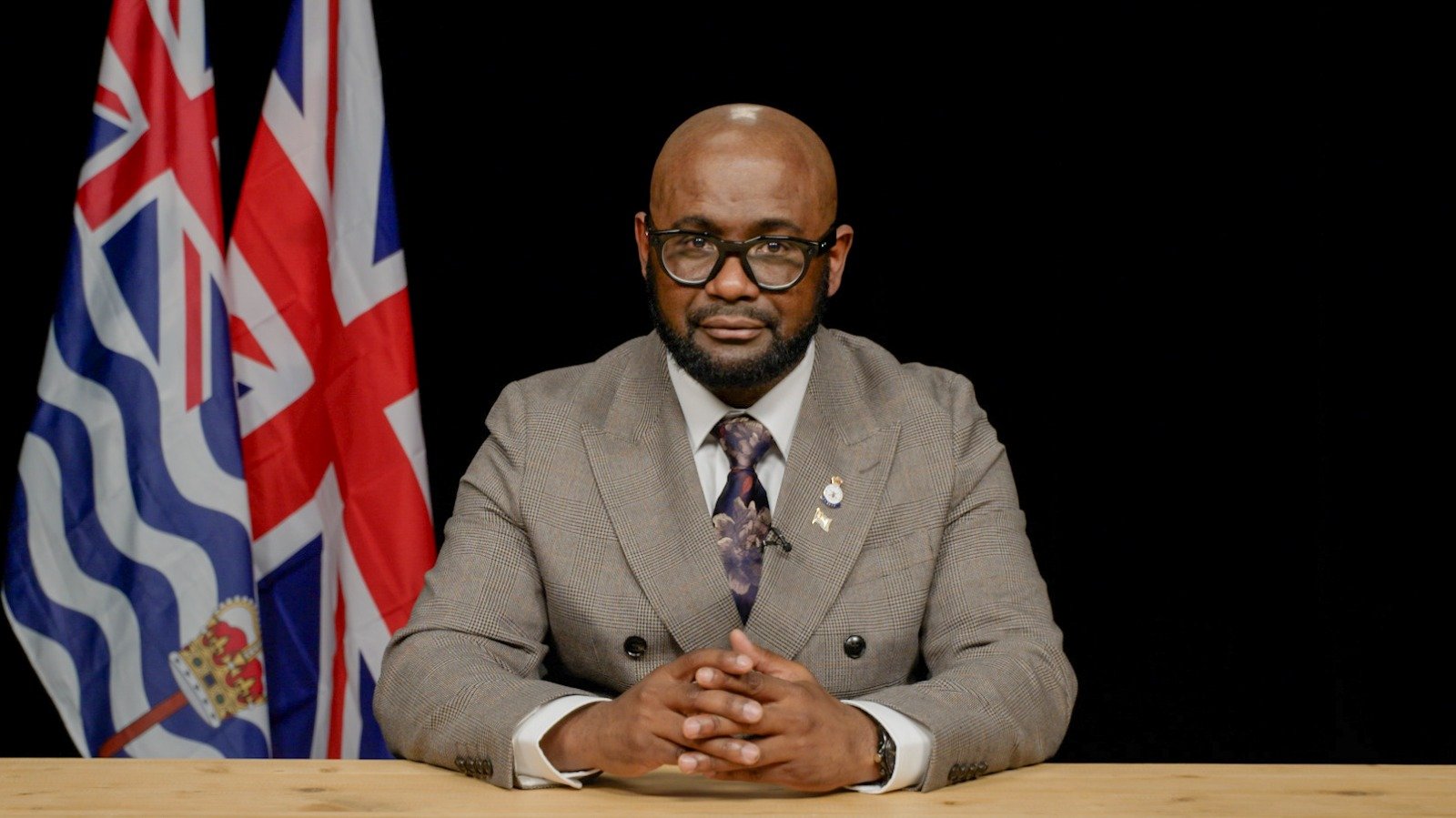
By Chagossian First Minister Misley Mandarin.
When the United Kingdom put its signature to an agreement with Mauritius on 22 May, handing over sovereignty of the Chagos Archipelago, no one asked my people whether we wanted it. The decision was made over our heads, in defiance of wishes we had stated plainly. For the Chagossians, our consent was neither sought nor given.
I am a British Chagossian, and my family belongs to these islands. During the Cold War, my ancestors were among the thousands forcibly removed so that a joint American and British military base could rise on Diego Garcia. Exile has been our condition ever since.
Now we confront the threat of being erased a second time. The first time it was expulsion; this time it would come by the stroke of a diplomat's pen.
The strength of our objection is not in doubt. A survey carried out in early December under the supervision of the House of Lords International Relations and Defence Committee found overwhelming Chagossian opposition to transferring sovereignty to Mauritius. Across the world, a clear majority of Chagossians declared that they wish to remain British and that they do not trust Mauritius to protect their rights, their culture or their future.
Our case rests on law as much as on history. A United Nations committee, in a statement issued earlier this month, restated that the Chagossian people hold a right to self-determination, and warned that this right has been undermined by arrangements struck without our participation or our consent. Even so, Prime Minister Keir Starmer is set on pushing the handover of our islands through, regardless of how overwhelming the opposition has been.
This is what drove Chagossians to act as never before. Through an independently organised and verified process made possible by the Great British PAC, the families forcibly evicted from the islands between 1967 and 1973 have proclaimed a Chagossian government in exile, to assert our right to self-determination and to carry our voice onto the world stage. I was elected interim First Minister to lead that effort.
For most Americans, the Chagos Archipelago means Diego Garcia, one of the most strategically vital military installations anywhere on earth. It is the platform from which the United States projects power across the Indian Ocean, guards essential trade routes, and helps hold the region steady.
To us, it is home.
We are not against the base. Quite the reverse: Chagossians have long backed the American presence and regard Diego Garcia as central both to international security and to our own prosperity in the years ahead. Our aim is to come home to our islands as British Chagossians, loyal to the Crown and faithful partners of the United States.
The new agreement Keir Starmer has signed would jeopardise that stability.
It rests on no durable consent and is exposed to every shift in politics. Opposition to the deal already cuts across several political parties in the United Kingdom, more than one of which has said openly that, on entering government, it would move to revoke the arrangement or “stop paying the rent”. The fate of Diego Garcia would therefore hang on a brittle legal and financial deal, at the mercy of changing politics in London.
On the terms reported publicly, continued access to the base hinges on long-term UK payments to Mauritius. Any later disruption, delay or dispute over those payments could imperil both British and American access. Once sovereignty has passed, enforcement would sit wholly beyond Western control.
This is what makes it so serious: it would hand Mauritius decisive leverage over one of the most important military facilities on the planet.
Mauritius is a small state navigating a region gripped by intense great-power rivalry. It has built ties with a range of outside powers, China among them. No one can foretell how alignments will fall in future, but transferring sovereignty over Diego Garcia introduces a strategic uncertainty that simply does not exist today.
Unresolved legal questions remain as well. Mauritius has signed the African Nuclear Weapon Free Zone Treaty, known as the Pelindaba Treaty. Mauritian officials insist this will have no bearing on Diego Garcia, yet the treaty framework leaves room for later reinterpretation or a change of policy. After sovereignty transfers, such choices would no longer be made in London or Washington.
For the United States, whose undersea deterrent and wider Indo-Pacific posture depend on secure and predictable access to Diego Garcia, these are not abstract worries. They reach to the very heart of long-term force projection and strategic stability.
A better path exists, one that sits squarely with American values and American interests.
The Chagossian people should be recognised as holding the right to self-determination, a right the United Nations acknowledges but which the present agreement effectively sidesteps. A resettled Chagossian community exercising that right while remaining under British sovereignty would clear away lingering legal challenges, settle the status of the base, and anchor Diego Garcia firmly within a democratic framework aligned with Western interests.
We stand ready to build that future. We picture a renewed Chagossian presence on the outer islands, a share in the work of base operations, and a partnership that advances both justice and security. In time, Chagossians could take a direct role in supporting base operations and related services, deepening the legitimacy and stability of the whole arrangement.
President Donald Trump has said many times that he opposes bad deals. This is one of them. America has the chance to help put it right, not by working against allies, but by encouraging a settlement that honours the rights of an exiled people while safeguarding a vital strategic asset.
To support Chagossian self-determination would be to show the best of the American tradition: standing alongside a small nation reaching for freedom, while protecting the security architecture on which so much rests.
Misley Mandarin is interim First Minister of the Chagossian government in exile. www.BIOTChagos.com