The treaty handing the British Indian Ocean Territory (BIOT) to Mauritius was meant to be a tidy diplomatic triumph for Labour. Instead, it is fast becoming a fault line running straight through the party, as senior Labour MPs line up alongside the Conservatives to question the deal that signs away British sovereignty.
As the agreement formally transferring sovereignty of the islands comes under the microscope, the backlash from inside Labour's own ranks has grown louder by the week. Senior MPs are openly voicing doubts about the treaty's transparency, its environmental guarantees and, above all, its treatment of the Chagossian community.
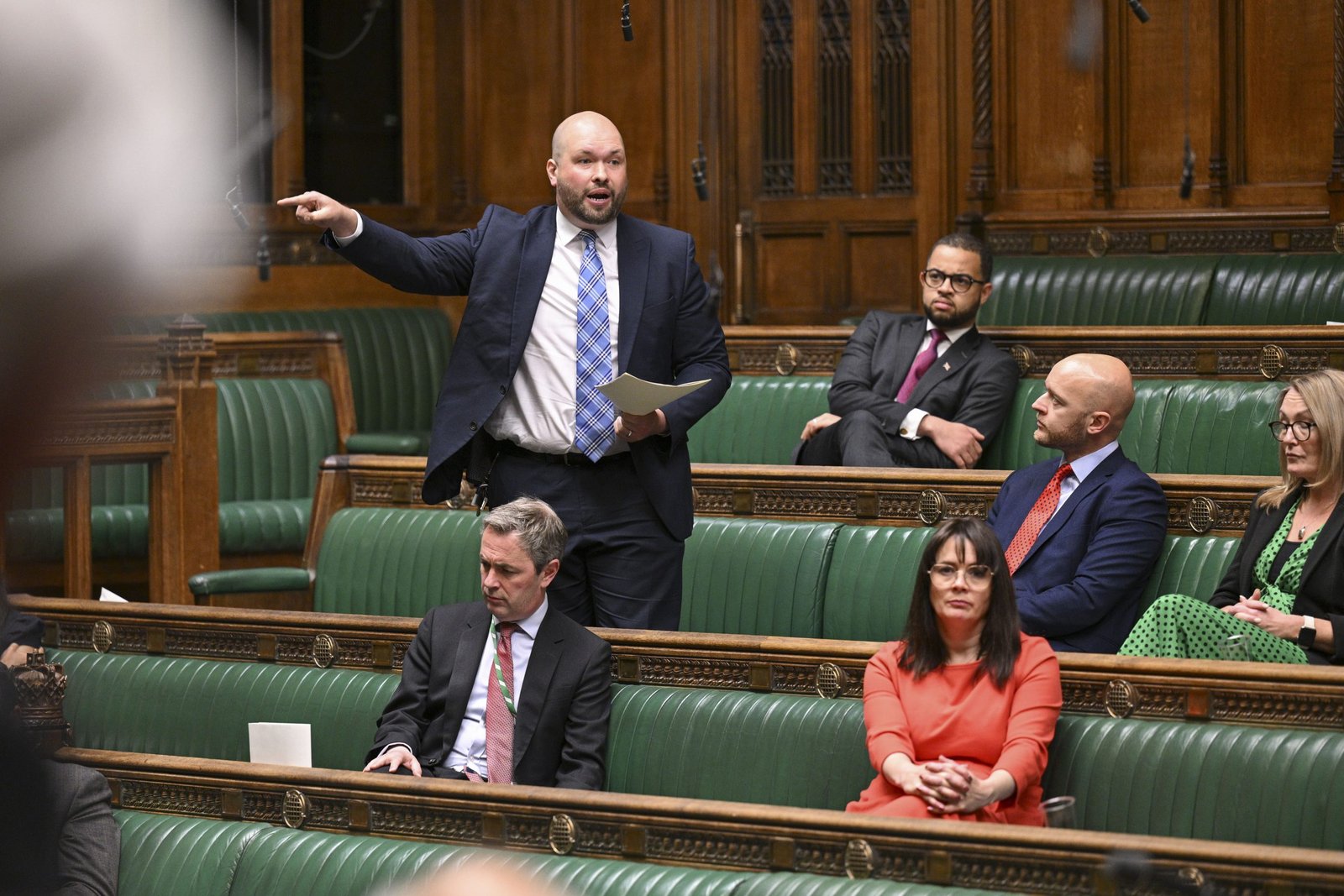
The sharpest intervention came last week. In a combative session of the Foreign Affairs Committee on 23 June, the Committee's own Chair, Labour's Emily Thornberry, took Foreign Office officials to task over what she described as a failure of democratic oversight and inadequate safeguards.
“Do you not think that the CRAG process is something from the 19th century and ought to be thrown in the Thames so that we can have a little democracy in this place by having a vote and a debate when treaties are signed?”
That was Thornberry in Q6, taking aim at the Constitutional Reform and Governance Act 2010, the legislation that governs how Parliament scrutinises treaties.
Environmental Alarm Bells
The archipelago is widely regarded as one of the last untouched marine ecosystems on the planet, and Thornberry pressed officials hard on the ecological dangers of the handover.
“What concerns me is this: are we going to be handing over these islands before there is in place some form of protection for the wildlife on these islands?”
She put that question at Q69. Pressing on whether a dangerous window might open up between the handover and the arrival of any environmental enforcement, she warned at Q72: “Might there be a gap during which time the Chinese trawlers turn up and grab all the fish?”
She also wanted hard detail on the money, asking at Q64: “Is there going to be a ringfenced fund that is going to be given by Britain to Mauritius for the protection of the environment and wildlife on these islands?”
The theme was not new for her. In an earlier Commons debate, Thornberry had already spelled out the global stakes:
“At a time when our oceans have never been under such stress, the British Indian Ocean Territory is one of the last ocean wildernesses in the world, and tuna trawlers are lining up on the boundary of the no-take zone…”
National Security and Sovereignty Questions
Another thread of concern ran through the legal and operational guarantees surrounding Diego Garcia, the joint US–UK military base. Thornberry questioned how law enforcement would function in future and whether Mauritius could be relied upon to uphold maritime protections.
“So at the moment we are taking it on trust that Mauritius will have a patrol vehicle outside the 12-nautical-mile limit?”
That pointed question came at Q68. There was frustration, too, at the lack of firm timelines and the vagueness of the answers offered by Minister Stephen Doughty and Foreign Office Director Peter Candler. “I am just worried that this is not going to work… and that there will not be a framework in place…” she said at Q76.
Peter Lamb MP: ‘Very Disappointing’ and Lacking Legal Certainty
The disquiet stretches well beyond the committee room. Labour's Peter Lamb MP, who represents a sizeable Chagossian population in Crawley, has repeatedly attacked the deal both publicly and in Parliament.
Back in January he pointed out that “no engagement had taken place with the Chagossian community” while the deal was being negotiated. By May he was branding the treaty “very disappointing”, warning that it offered “none of the legal certainties required to guarantee Chagossians—particularly those resident in the UK—the ability to access the islands or for permanent habitation to be possible.”
In the Commons, Lamb pressed ministers on what he was meant to say to the people he represents:
“What should I tell my Chagossian constituents, when they ask the moral basis upon which the UK is ignoring their right to self‑determination…”
He was later quoted in media reports, including The Telegraph, condemning the deal as the “worst thing” the Labour Party had done—a striking rebuke to fire at one's own government.
Cabinet-Level Disquiet and Echoes of Past Blunders
The unease reaches the top table, too. According to The Guardian, the Chagos agreement has caused concern at cabinet level, with two ministers privately worried about its cost at a time of intense pressure on public spending.
One former Labour adviser told the paper the treaty could become “a totemic issue akin to Gordon Brown selling half the UK's gold reserves.” Another went further still, calling the deal “a catastrophic error” and arguing that Britain should walk away from the process entirely.
“The best way to solve it now and save face is to pull out and say: ‘We tried to be constructive, tried to support the rules-based order, but Mauritius has been completely unreasonable and now it will never be returned.’”
A Widening Rift Inside Labour
What the government once hoped to present as a foreign policy victory and a badge of commitment to international law has curdled into a source of division within Labour itself. When even a committee chair sitting in a leadership role is no longer persuaded the process is sound, as Thornberry's intervention makes plain, the political weather has clearly turned.
With scrutiny mounting from parliamentary committees, grassroots campaigners and the press alike, ministers are under renewed pressure to spell out the treaty's terms, defend Britain's strategic interests, and finally honour the rights the Chagossian people have been denied for so long.
That pressure is now matched in the courts. A legal battle to ensure Chagossians are lawfully consulted before the UK Government signs away sovereignty of their homeland cleared its major first hurdle in the High Court last week.
The Judicial Review, brought by Chagossian claimant Louis Misley Mandarin with the support of the Great British PAC, has been formally accepted by the court and granted an expedited timetable. The Government must now file its legal defence by 4 July, sharply compressing the usual 28-day window. A High Court judge is expected to review the matter around 11 July, which could trigger a full hearing by the end of the month.
Claire Bullivant, CEO of the Great British PAC, said:
“This is a huge step forward. The courts have recognised the urgency and importance of this case. We now call on Parliament to suspend any process related to Chagos sovereignty until the Court has ruled. Justice demands no less.”
The full transcript and video of the Foreign Affairs Committee session of 23 June 2025 can be found at committees.parliament.uk.