
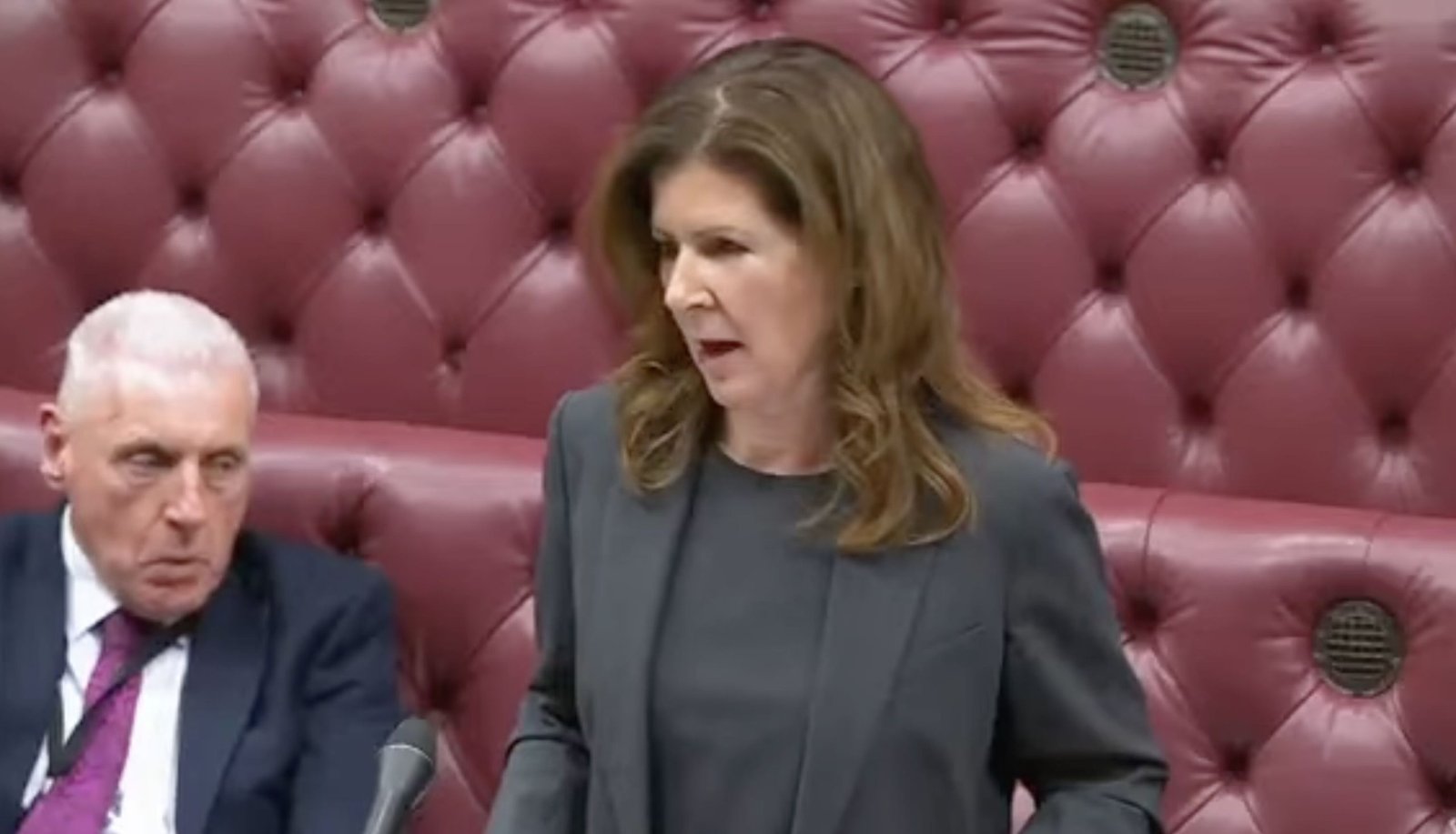
A single sentence spoken in the House of Lords last week has put a Government minister at odds with more than a century of documented history. Baroness Chapman, the Foreign Office Minister, is now under sustained scrutiny from historians, legal observers and Chagossian families over a claim that the archival record, the courts and international bodies all flatly contradict.
During the first day of Committee on the Diego Garcia Bill, the minister asserted that “The Chagos Archipelago has no permanent population nor has ever been self governing. No question of self determination for its population can therefore arise.”
That statement was offered as the Government's justification for shutting Chagossians out of decisions about the future of their own homeland. Yet it runs directly against a substantial and long-established historical record. Critics point out that it recycles the very falsehoods Britain leaned on in the late 1960s and early 1970s to excuse one of the most widely condemned expulsions of a British community in modern times.
A permanent, multigenerational population
The documentary evidence is unambiguous: a settled Chagossian population lived on the islands for well over a hundred years before the deportations. Church registers and colonial-era records log births, marriages and burials across the generations on Peros Banhos, Salomon and Diego Garcia. These were people living in established villages, with homes, chapels, gardens and community buildings.
Far from being the transient labourers that earlier British memos described, the islanders were a Creole-speaking people with their own cultural identity and family lines rooted in the archipelago. The UK courts, United Nations human rights bodies and academic researchers have each recognised the Chagossians as a distinct, continuous and permanent people.
For Baroness Chapman to say the islands had “no permanent population” is, historians argue, demonstrably false.
Evidence of local leadership and self-organisation
The minister's claim that the islands had “never been self governing” is just as inaccurate. Britain held formal sovereignty, but for much of the archipelago's history there were strikingly few resident British administrators. In practice, daily life was structured and overseen by leaders drawn from within the community itself.
Testimony from one of the oldest Chagossian families adds weight to this picture. The Mandarin family, originally from Peros Banhos, have given detailed accounts of how their ancestor Jean Charles Mandarin – a blacksmith who served the whole island community – was nominated by his fellow residents to act as a local leader in the absence of any British administrative presence. By the family's account, he performed the functions of a chief or headman, keeping social order and helping coordinate island affairs long before the removals began.
His role is recorded even in a footnote of the scholarly Brill volume Eviction from the Chagos Islands: Displacement and Struggle for Identity Against Two World Powers, which describes Mandarin as a leader and “a thorn in the flesh” to the authorities.
Colonial paperwork rarely captured these internal structures, but the Mandarin testimony fits squarely with the wider historical understanding of island life, in which senior Chagossians organised labour, settled disputes and looked after community welfare.
Leadership across the generations
That tradition of self-organisation did not stop with one man. Jean Charles Mandarin's descendants went on leading their community both before and after exile. His grandson, Fernand Mandarin, born on Peros Banhos, would later head the Chagossian Social Committee, represent Chagossians at the United Nations, and set down one of the fullest oral histories of life on the islands.
The family remains at the heart of the struggle today. Members of the Mandarin family are key participants in the Judicial Review championed by the Great British PAC, which is currently awaiting judgment, and they are actively challenging the lack of transparency in the ongoing negotiations between the United Kingdom and Mauritius. This unbroken, multigenerational record of community leadership further demolishes any suggestion that the Chagossians lacked the societal structures essential to self-determination.
A discredited narrative resurfaces
Baroness Chapman's words echo the arguments deployed during the Cold War to justify mass deportation. Back then, the Foreign Office insisted the Chagossians were “contract labourers” with no permanent rights – even as it held internal evidence to the contrary. Those claims have long since been discredited, yet critics say the same narrative has now resurfaced in the minister's remarks.
The facts put before peers are being challenged precisely because they collide with decades of documented evidence. Historians warn that the minister's comments risk perpetuating an outdated and inaccurate colonial narrative – one that erases a people who lived, worked, worshipped and raised families in the archipelago long before they were forced out.
A question that can no longer be dismissed
As the Lords prepares for the Bill's second day of Committee on Tuesday (25 November), peers from across the political spectrum are expected to challenge the Government's position. The record is clear: the Chagos Archipelago did have a permanent population, and that population did develop forms of community leadership and internal governance.
Whether or not Britain ever formally acknowledged those structures, they undeniably existed. To pretend otherwise, critics argue, is to repeat the very errors that produced the original injustice. And with decisions now being taken that will shape the islands' future, the question of Chagossian self-determination can no longer be brushed aside.
By Claire Bullivant