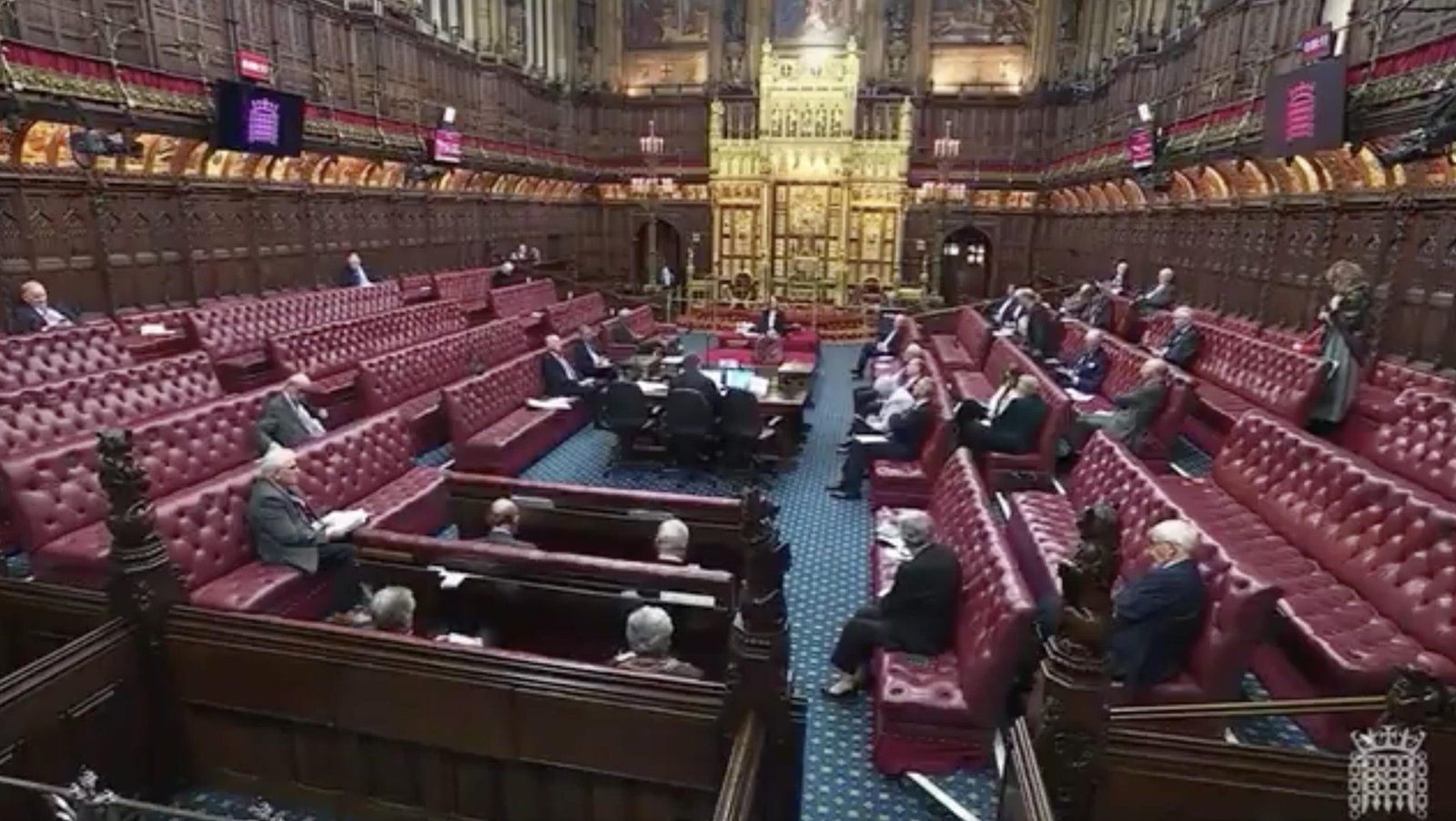
It was nearly midnight when peers finally turned to the future of an entire territory and the people born on it. The House of Lords had sat late into Tuesday evening to open Committee Stage of the Diego Garcia Military Base and British Indian Ocean Territory Bill, and above the chamber sat more than two dozen Chagossians, quiet, stoical and visibly sad, watching strangers decide the fate of their islands.
They had been there since 4.30pm, looking down as peers debated the future of their homeland, their passports and their very identity.
Down in the chamber the contrast was stark. Setting aside front-bench spokespeople, no more than three Labour peers were present, alongside a couple of crossbenchers and not a single Liberal Democrat backbencher. Conservative and Unionist peers, meanwhile, turned out in force and shouldered almost all of the detailed scrutiny of the Bill.
For many Conservatives the lesson was unmistakable. The Chagossians turned up. The Conservatives turned up. Labour did not.
Powerful Conservative speeches, barely any Labour interest
One after another, Conservative and Unionist peers and their allies delivered forceful contributions. Lord Callanan led off with a forensic dissection of the Bill, proposing a purpose clause designed to set out in plain English exactly what the legislation does. He noted that the Bill
- cedes sovereignty over the Chagos Archipelago to Mauritius,
- dissolves the British Indian Ocean Territory as a British Overseas Territory,
- keeps British administration only on Diego Garcia for the purposes of the US-UK military base,
- and rolls back nationality routes previously granted to the Chagossian people.
Lord Callanan emphasised that the Bill is “completely silent” on who will hold sovereignty over the Chagos islands in future, a departure from earlier legislation that openly named the state taking over whenever British territory was given away.
Lord Lilley came next with a typically robust intervention that went straight to the political core of the matter. He drew attention to evidence that more than 99 per cent of Chagossians polled want to remain British, citing a survey of over 3,500 Chagossians, a remarkable share of a global population thought to number perhaps eight to ten thousand. That polling has been reported at length by Conservative Post and the Great British PAC, with independent analysis confirming that over 99 per cent of respondents backed British sovereignty and rejected the current deal.
It fell to Lord Hannan of Kingsclere to make one of the sharpest constitutional points of the night. In remarks campaigners shared widely, he argued that there is nothing wrong with holding a referendum across scattered territories and no technical obstacle to consulting the Chagossian people directly. The obvious question hung in the air: why has the Government not arranged such a vote, and why have Labour not pressed for one?
Baroness Hoey, a tireless campaigner on the issue, gave one of the evening’s most affecting speeches. Drawing on the testimony of Chagossian natives, she recounted how families were told to leave their homes carrying only what they could hold, how pets and livestock were seized and killed, how possessions were hurled into the sea and families torn apart, and how one islander remembered the moment the ship pulled away and the islands slipped from view as “the day the world went dark”.
“The Chagossians were ordered to leave their homes with only what they could carry. Some recall arriving at the jetty to see their dogs and livestock taken from them and killed before they were pushed onto the ship. Others remember family members separated, possessions thrown into the sea, and the moment the islands disappeared over the horizon as, ‘the day the world went dark’.”
Her argument was straightforward. If Parliament knows all of this, if the horror inflicted by a previous Labour Government is now openly acknowledged, how can a Labour Government in 2025 force through a deal the Chagossians overwhelmingly reject, while Labour peers can barely be bothered to attend the debate?
Lord McCrea of Magherafelt and Cookstown, of the Democratic Unionist Party, also spoke powerfully on sovereignty, observing in a line that the Great British PAC and others have circulated widely that Mauritius has as much claim to Chagos as he has to the title of Dauphin of France.
Lib Dem Lord Purvis and Labour under fire
A significant flashpoint in Committee was the status of the UK-Mauritius treaty itself. Lord Purvis of Tweed, speaking for the Liberal Democrats, insisted that the treaty had already been ratified and that its terms, Mauritian sovereignty included, were effectively settled.
Conservative peers, supported by external constitutional analysis, pointed out that this is simply wrong. Under long-standing practice, now embodied in the Constitutional Reform and Governance Act, the Government does not ratify a treaty until the necessary implementing legislation has cleared Parliament and the 21 sitting-day scrutiny period has elapsed.
The Lords Library briefing on the Diego Garcia Bill confirms exactly that, describing the Bill as part of the domestic process that must be completed before ratification and noting explicitly that the treaty has not yet been ratified and cannot enter into force until both the UK and Mauritius have done so.
The Great British PAC seized on the point, pressing Labour front-bencher Baroness Chapman of Darlington to admit that Lord Purvis was mistaken and that the treaty is not yet ratified. It accused certain Labour and Lib Dem figures of misleading Parliament on the matter and called on them to “get the facts right”.
Later in the evening Lord Lilley pushed the accusation further, charging Lord Purvis with siding with Labour not on principle but because he wanted more Liberal Democrat peers appointed to the upper House. By accounts of the debate, Lord Purvis did not deny the charge when it was put to him, a silence that Conservative peers and campaigners have noted with dismay.
To Conservative eyes, it made for an unflattering tableau: a Labour Government ploughing ahead with a contentious treaty, Liberal Democrat spokesmen seemingly more exercised by numbers in the Lords than by the Chagossian people sitting above them, and Labour scarcely present in the chamber while life-changing decisions were thrashed out.
Who pays, and who loses, under Labour’s Chagos deal
Beyond Parliament, the Great British PAC has been spotlighting what it calls the absurdity of Labour’s Chagos deal. In one widely shared post it pointed out that the United States pays for its own military facilities, yet Labour effectively wants the British taxpayer to foot the bill for a base used chiefly by the US military, all while handing away British territory. The PAC was blunt in its verdict, saying the arrangement “makes no sense” and that Keir Starmer will “go down in the history books as a complete fool.”
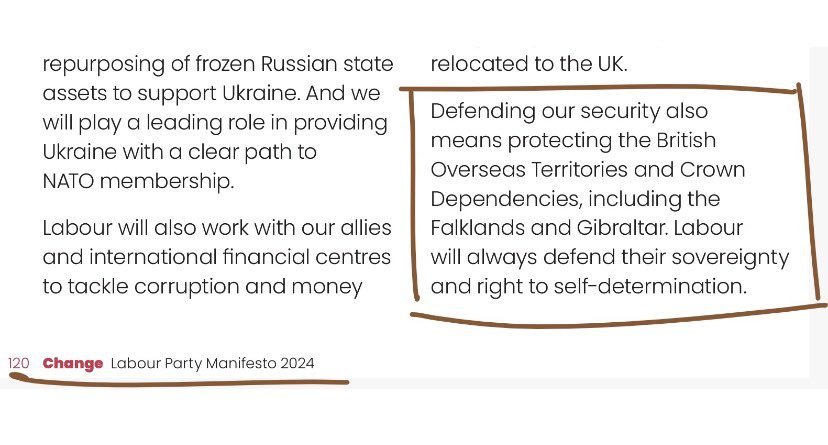
It is also worth recalling that the treaty featured nowhere in Labour’s manifesto. On the contrary, the party’s 2024 manifesto promised to defend the British Overseas Territories and Crown Dependencies, a commitment flatly contradicted by its present course.
Why are British taxpayers being forced to pay to give away territory?
Official figures from Parliament and the Government put the net present value of UK payments to Mauritius at around 3.4 billion pounds over 99 years, with an average annual payment of roughly 101 million pounds in 2025 prices.
Yet Conservative MPs, among them Andrew Rosindell, along with several media investigations, have demonstrated that once inflation and full liabilities are taken into account, the total cost to Britain over the century-long life of the agreement will be nearer 35 billion pounds.
The Great British PAC has echoed that figure in its own campaigning, arguing that Labour is not merely surrendering sovereignty but saddling Britain with an “eye watering” settlement of around 35 billion pounds, to subsidise Mauritius while retaining no sovereignty over the islands beyond special rights on Diego Garcia.
From a Conservative standpoint it is hard to see how Labour can defend the combination. The US secures a base, Mauritius gains both sovereignty and enormous sums over the long term, and the British taxpayer pays the bill while British Chagossians lose both their territory and any clarity over their identity.
Chagossian identity under pressure
A further and growing worry concerns the status of Chagossian identity and official records. The Great British PAC says it has seen evidence that Mauritian authorities are already amending Chagossians’ official documents, switching places of birth such as Diego Garcia, Peros Banhos and Salomon to “Mauritius”. Campaigners warn that if this is indeed happening, it risks wiping Chagossian identity and history from the record before any formal transfer of sovereignty even takes place.
At the same time the treaty and Bill will dissolve the British Indian Ocean Territory as a British Overseas Territory, while the Bill’s nationality clauses amend or repeal earlier provisions introduced to right injustices in British nationality law for Chagossians. The House of Commons Library briefing confirms that the Bill’s purpose includes nationality changes reflecting the disappearance of BIOT as a territory.
For many Chagossians this is no dry technicality. Their passports are among the last tangible ties to the islands of their birth or heritage. Replace those ties with generic “Mauritius” labels, and weaken or complicate future nationality provisions, and a part of their identity is stripped away.
Baroness Hoey’s speech, with its account of families herded aboard ships, dogs killed on the quayside, possessions cast into the sea and the islands fading from sight as “the day the world went dark”, laid bare the human reality behind what is described on paper as a technical realignment of sovereignty.
Do the Chagossians support Labour’s deal? No.
The Government and the Labour front bench have repeatedly claimed to be working with a “wide group” of Chagossian representatives at home and abroad. Baroness Chapman pointed to a contact group that officials say has “wide representation” from communities in the UK, Mauritius, Seychelles and elsewhere.
The Great British PAC and several other organisations have pushed back hard against that account. The PAC has questioned Baroness Chapman’s claim that Labour is engaging a broad group of Chagossians, demanding to know, “Who are these people?”
The PAC has produced evidence independently verified by Whitestone Insight, drawn from a survey of more than 3,500 Chagossians across the global diaspora. More than 99 per cent of respondents said they want to remain British and oppose any treaty handing sovereignty of their homeland to Mauritius, a finding that sits in stark opposition to the line Labour continues to push.
Figures published alongside the Friends of the British Overseas Territories show that 99.22 per cent of those surveyed backed retaining British sovereignty, with similarly overwhelming majorities supporting the judicial review organised by the Great British PAC that is now challenging the treaty in the courts.
Conservative peers returned to these findings repeatedly in Parliament. Lord Lilley observed that, in a worldwide community of just eight to ten thousand people, a sample of over 3,500 is exceptionally large, and that when more than 99 per cent of them voice a wish to remain British it becomes very hard to maintain that Labour’s treaty reflects the wishes of those most directly affected.
Lord Hannan’s call for a referendum fits the same logic. If the community is this small and this consistent in wanting to stay British, why not simply ask them formally, and why are Labour and their allies so reluctant to allow any direct consultation?
Labour’s attitude, in the chamber and beyond
The visual impression on Tuesday evening was damning. Above, a public gallery packed with Chagossians who had travelled and waited to see their case heard. Below, a conspicuously sparse Labour presence, no Liberal Democrat backbenchers and only a couple of crossbenchers, while Conservative and Unionist peers carried nearly all of the detailed scrutiny.
As the night wore on and peers visibly tired, it became ever clearer that Labour and the Government simply wanted the Bill pushed through. Important amendments, including those Baroness Hoey had tabled on bird, fish and environmental protections, were taken late and at pace. To many Conservatives it resembled a dash to the finish rather than any serious engagement with the detail, and all of it under the gaze of the Chagossians who had been watching since mid-afternoon.
Outside the chamber, the Great British PAC distilled the wider unease felt by many Conservatives and Chagossian campaigners. In a series of posts it argued that
- Labour’s Chagos deal surrenders sovereignty and heaps vast costs onto the British taxpayer,
- the deal does not add up financially, at an estimated 35 billion pounds over its term,
- Chagossians’ birthplaces are already being administratively relabelled as “Mauritius”,
- and Labour is forging ahead despite overwhelming evidence that Chagossians want to remain British.
For many on the Conservative benches the conclusion is unavoidable: Labour is once again being cruel to the Chagossians in 2025, just as a previous Labour government was cruel in the 1960s and 70s when the islanders were uprooted. The difference today is that the community can watch and measure that cruelty in real time. They can sit in the gallery and count how many Labour peers bother to turn up, they can read the treaty that gives away their homeland, and they can see a government and an Opposition leadership unwilling to pause, listen or consult them properly.
The Chagossians must be consulted
The Diego Garcia Military Base and British Indian Ocean Territory Bill is no routine measure. It ends British sovereignty over an entire territory, amends nationality law in ways that cut across a long-promised correction of past injustices, locks Britain into vast payments over nearly a century, and leaves a small, scattered people uncertain about their legal status and identity.
On Tuesday night it was Conservative and Unionist peers, together with allies such as Baroness Hoey, who did the heavy lifting in scrutinising that Bill. They pressed the Government on sovereignty, cost, security, the environment and the rights of the Chagossians themselves. They corrected factual errors about treaty ratification, challenged Labour’s claims about who it is consulting, and placed on the record the polling showing that over 99 per cent of Chagossians want to remain British.
Labour, by contrast, was absent in numbers and in attitude alike. At the very moment when Parliament should have been listening hardest, Labour appeared not to listen at all.
If the United Kingdom is to take its obligations to the Chagossian people seriously, one simple demand must be met. The Chagossians must be consulted, clearly and formally, before sovereignty over their homeland is signed away in their name.