
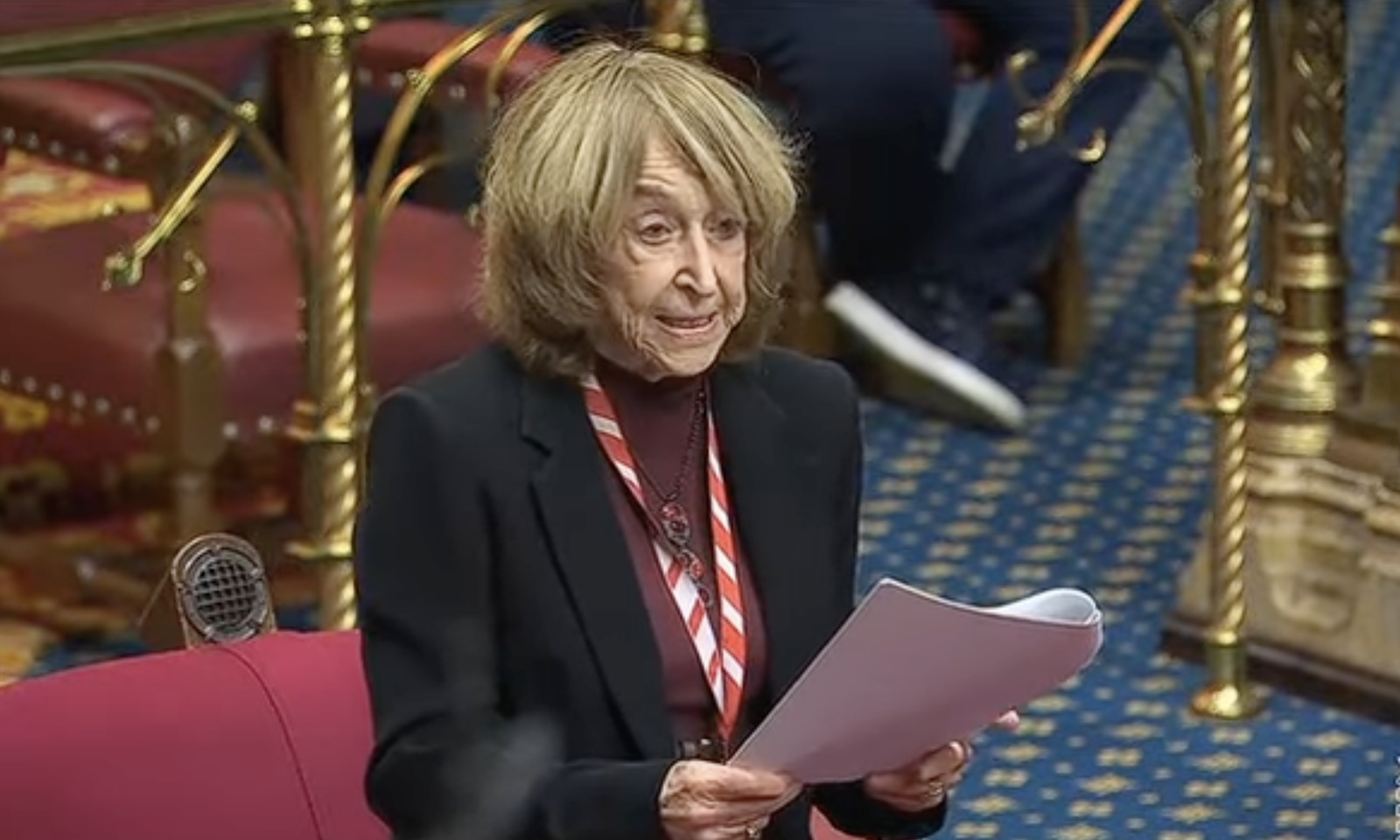
It took four attempts at a single voice vote, a speech delivered from the Chair and the personal intervention of the Government Chief Whip before Labour could finally drag its Chagos surrender Bill over the line. Monday afternoon in the House of Lords was, by any honest reading of the record, a humiliation for ministers — and a worrying one for anyone who cares about how Parliament treats decisions of this magnitude.
During Third Reading of the Diego Garcia Military Base and British Indian Ocean Territory Bill, Labour peers endured a punishing session, picked apart by a run of forensic speeches that went after the Government on security, cost, self-determination and the environment. Ministers did secure passage in the end, but only after a series of disputed voice votes that sparked accusations of confusion and procedural mishandling in the Chamber — and only after being beaten on a Conservative regret motion by 32 votes.
The Bill was read a third time shortly after 4pm. Baroness Chapman of Darlington insisted the treaty “protects the Diego Garcia military base and ensures that the UK retains full control over this vital asset”, and argued it was “crucial” to ratify it “in the ever shifting geopolitical landscape of our age”. Peers spent the afternoon taking that reassurance apart. Lord Callanan warned the agreement “does not secure the long-term future” of the base and would “create uncertainty over the continuing unrestricted use”. There was serious concern over the Pelindaba Treaty, which Conservative critics warned could be deployed to obstruct or legally challenge the freedom of the UK and US to move nuclear submarines and related assets across the Indo-Pacific. Baroness Goldie dismissed the Government’s reassurances as “not worth the paper they are written on—just a load of flummery”. Lord Lilley put the Government’s case under forensic scrutiny, challenging Labour ministers to back up their claim that third countries could render the base “inoperable” if the deal collapsed, asking pointedly: “what goods and what services, and supplied by which countries?” — a question he later said ministers had conspicuously failed to answer.
Shortly afterwards, Lord Callanan tabled a regret amendment condemning the agreement on several fronts: cost, the absence of a mandate, uncertainty over how the base would operate, and the failure to consult the Chagossians.
In his speech, Lord Callanan noted that ministers had repeatedly justified the deal on grounds of “legal certainty” yet had never explained what binding legal threat would actually force the base to close. Ministers, he told the House, were treating one UN view as binding while disregarding another: “So we have two diametrically opposed opinions from different UN bodies, one of which is to be obeyed without hesitation while the other, apparently, is to be completely ignored.”
He returned to the Pelindaba Treaty, arguing that the agreement was “completely silent” on nuclear-related constraints and warning that, far from resolving anything, it risked manufacturing fresh legal and military uncertainty.
On cost, Lord Callanan was blunt. The £34.7 billion figure, he told peers, “has now been confirmed in an FoI from the Government Actuary’s Department”, adding that the minister had “spent months telling us that the cost is, apparently, only £3.4 billion” before challenging her: “I hope she will take the opportunity today to apologise and correct the record.”
A parade of senior peers demolishes the Government’s case
One experienced peer after another rose to question the Government’s assurances.
Baroness Goldie, a former defence minister, said the Government’s approach carried “all the hallmarks of a letter drafted by someone blind to the basic precepts of defence and security but who finds much more comfortable the languorous corridors of the FCDO”.
The problem, as she saw it, was “irremediable”, and she branded the bilateral assurances “not worth the paper they are written on, just a load of flummery”.
Lord Altrincham turned to the open-ended cost exposure created by inflation, warning: “Inflation in the future is unknown, unknowable and uncapped. That means the payments under this contract are unknown, unknowable and uncapped.” The minister’s earlier reference to £3.4 billion, he added, “was not correct, because the total cost is not known”.
When Lord Leong, a Labour Government whip, tried to interrupt the speech with “This is Third Reading. Arguments made at previous—”, the Chamber answered with an “Oh!” before he pressed on: “This is Third Reading and the noble Lord is repeating what has been debated before.”
Lord Weir of Ballyholme said the Bill was still “totally unacceptable”, telling peers: “We are not simply handing over sovereignty to Mauritius; we are paying it an expensive dowry to take over what has been British sovereign territory for 200 years.” The result, he warned, would be “a military base with a noose around it, ever tightening as time moves on.”
Baroness Hoey said she backed the regret motion but that the word itself was “not nearly strong enough”, calling it “a very sad day if the Bill goes through”. She attacked what she called the “hypocrisy” of the Government’s stance on self-determination: “No Labour Peer can say that it was, and no Labour MP can say that they were elected to do this.” And she put the choice plainly: “We either believe in the right of the Chagossians, in self-determination and in the long-term security of our country, or we do not.”
Lord Lilley again pressed the Government on its claim that third countries might restrict supplies, asking “what goods and what services, and supplied by which countries?” and afterwards complaining that ministers had still given no answer: “She is the Minister and they are the Government; she must give us the answer and not say that there must be an answer from someone else.”
Lord Deben pressed the case on environmental safeguards, asking the minister: “Why on earth was there not a clear connection between our payments and the upkeep of this, the most important marine environment area in the world?”
Lord Hannan of Kingsclere delivered one of the afternoon’s sharpest interventions: “If, as the upper House and the revising Chamber, we are not prepared to take a stand on something of this magnitude and as permanent in its impact in changing the size of the United Kingdom and changing the maps… then what on earth are we here for?”
Baroness Chapman, replying, accused opponents of “wilfully ignoring the facts to score political points” and called that “shameful”. “This Government have one priority,” she told peers, “the safety and security of our citizens, the British people.” She also conceded a significant operational point on environmental enforcement: “It does not have the capability and expertise to do this as it stands, but we will make sure that we work alongside Mauritius so that that important work can be done.”
When the debate closed, Lord Callanan’s regret amendment was put to a division and carried by 201 votes to 169.
Four attempts at one vote
It was what came next that triggered the anger and the allegations of procedural confusion.
At 5.15pm the Deputy Speaker, Baroness Pitkeathley, put the Question: “That the original Motion, as amended, be agreed to.” Voices were heard for “Content” and “Not content”.
She then told the House: “I am informed that I should take the voices again.” She put the same Question a second time, and again heard “Content” and “Not content”.
She continued: “I called the original Motion, as amended, as a result of the vote that your Lordships have just taken part in. I will take the voices again.” The same exchange followed once more.
At that point the Government Chief Whip, Lord Kennedy of Southwark, intervened from the floor: “The Opposition have put their amendment to the House and it has been carried. They are now going to vote against the Motion that they have just won on. I do not understand that at all.” He added: “It seems to me that the normal thing is that, when a regret amendment is won, the Motion is amended and then the House approves the Motion as amended. We have tried to do that three times.”
As this played out, signals went up from the Labour and Liberal Democrat benches and from the Whips, urging Conservative and crossbench peers to stay silent. Peers were told — incorrectly — that voting “not content” would mean voting against the very amendment they had just carried. The effect was to sow confusion at precisely the moment a further division would normally have been called.
Baroness Pitkeathley then said: “My Lords, I will try putting the Question once again.” On the fourth attempt, the Motion, as amended, was agreed.
‘This Bill could and should have been put to a vote’
The Great British PAC, which has campaigned against the deal from the outset, said the sequence amounted to a serious breakdown in due process and that a further division should have been called. In a statement issued after the sitting, our CEO, Claire Bullivant, said: “Peers were asked four separate times whether it was their Lordships’ wish that the Government’s motion, that the Bill pass its Third Reading, be agreed… You do not get to pause proceedings mid-vote, deliver a speech from the Chair, misstate what is being voted on, and then re-run the question until you secure the answer you want.”
She added: “This Bill could and should have been put to a vote. It could have been defeated.”
Labour peers and ministers deny any wrongdoing and maintain that the treaty is essential to secure the base and protect national security. But the Hansard record tells its own story: a Third Reading debate in which ministers faced repeated and pointed challenges, lost the vote on Lord Callanan’s regret motion by a clear margin, and then presided over an unusually tense and contested finish to proceedings.
The Bill now returns to the Commons for consideration of the four Lords amendments, though the subsequent “ping-pong” is expected to be brief given Labour’s substantial majority in the lower House.
Statement from the Great British PAC
What happened in the House of Lords during the Third Reading of the Chagos Bill is unacceptable, and it should outrage anyone who believes in democratic process, parliamentary integrity, and basic fairness.
A majority of peers had already just voted in favour of the Conservative regret motion. That alone demonstrated that the House had lost confidence in the Government’s handling of this legislation.
Momentum in the Chamber was clearly against the Bill. At that point, the proper and democratic course was obvious: allow a division on whether the Bill should pass.
Instead, Labour ran roughshod over due process.
Peers were asked four separate times whether it was their Lordships’ wish that the Government’s motion, that the Bill pass its Third Reading, be agreed. On the first occasion, the voices against were plainly audible and stronger than those in favour. So blatant was this that a Clerk had to intervene and require the question to be put again.
On the second and third occasions, it was obvious that the House was divided and that a formal vote was required. Yet instead of calling a division, the Labour Deputy Speaker created confusion, spoke from the Chair inappropriately, and suggested – incorrectly – that peers were somehow voting against their own motion. That was simply untrue. Peers were voting against the Government’s motion that the Bill pass.
You do not get to pause proceedings mid-vote, deliver a speech from the Chair, misstate what is being voted on, and then re-run the question until you secure the answer you want.
That is not how Parliament is meant to function.
By the fourth call, after repeated pressure, confusion and intimidation, those who had clearly and consistently opposed the motion were effectively silenced. Only then was the Government’s desired outcome declared – without a division, without clarity, and without confidence.
Anyone who watches the footage will be disgusted.
This Bill could and should have been put to a vote. It could have been defeated. Instead, Labour chose procedural manipulation over democratic legitimacy. That is not a minor technicality. It goes to the heart of trust in our institutions.
This is not how a serious country conducts itself. It is not how constitutional decisions of enormous consequence – involving sovereignty, national security, billions of pounds of public money, and the fate of an entire people – should ever be handled.
The Great British PAC will not let this pass quietly. What occurred today demands challenge, scrutiny, and accountability. Due process was trampled because Labour was afraid of losing.
That alone tells you everything you need to know.
Claire Bullivant
CEO, Great British PAC