
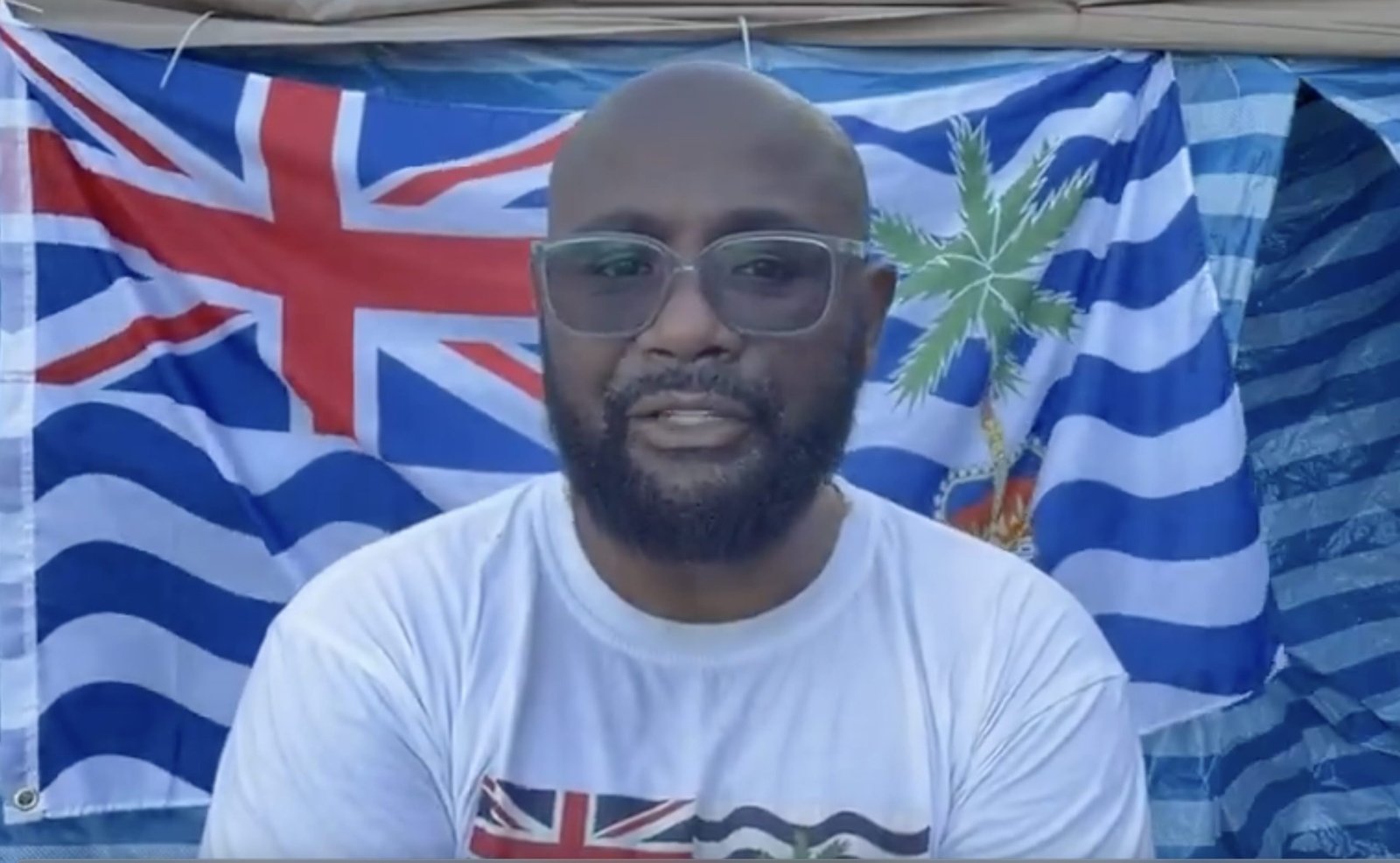
A group of Chagossian islanders who made the journey back to their ancestral homeland in the Chagos Archipelago will today (Friday) take on British authorities, in an unusual London sitting of the Supreme Court of the British Indian Ocean Territory (BIOT).
Listed as The King (on the application of Mandarin & Others) v Commissioner for the British Indian Ocean Territory, the matter comes before the territory’s Chief Justice, James Lewis KC, at the Field House tribunal centre. It stems from the government’s bid to remove the men after they landed on one of the remote islands earlier this year in a symbolic bid to come home.
A Return to Ancestral Land
The four claimants — Louis Misley Mandarin, Louis Michel Mandarin, Louis Antoine Lemettre and Guy Shane Adrien Castel — reached Île du Coin, in the Peros Banhos atoll of the Chagos Archipelago, on 16 February. Their stated aim was to start rebuilding a settlement on land where their families had lived for generations before being forced out more than half a century ago.
From the late 1960s into the early 1970s, Britain cleared the entire Chagossian population from the archipelago so that a joint UK-US military base could be built on the island of Diego Garcia. Many of those displaced were resettled in Mauritius; others would later make their way to the United Kingdom.
Chagossians have spent decades campaigning to win back the right to return.
One of the claimants, Misley Mandarin, has cast the voyage as a peaceful bid to reclaim a homeland his community holds was unjustly taken from them.
Our campaign — the Great British PAC — has worked alongside Chagossian activists in recent years and has backed both the organisation of this return and the legal action that has followed. Supporters say we helped establish a Chagossian government-in-exile structure and provided financial backing for the legal challenges aimed at securing the community’s right to go home.
Those close to the case say that mounting complex litigation in British and BIOT courts would have been all but impossible for displaced islanders without outside organisational muscle and funding.
Removal Orders Challenged
Officials acting for the BIOT administration moved within days of the men’s arrival, serving removal orders under the territory’s immigration laws that ordered them to leave and warned they had no permission to stay.
The claimants hit back with an urgent legal challenge, contending that the authorities had acted unlawfully and had failed to properly weigh whether they could remain on the islands while their permit applications were considered.
Chief Justice Lewis stepped in on 19 February, granting an interim injunction that barred the government from enforcing the removal orders and let the claimants stay in the archipelago while the case runs its course.
In making that order, the court held there was a “serious issue to be tried” over the lawfulness of the government’s conduct. The judge also pointed out that the men were living a long way from the Diego Garcia base and that even the authorities had not claimed they were any kind of security threat.
A Rare BIOT Court Hearing
The substantive hearing is set down for Friday at the Field House Tribunal Hearing Centre in central London, a venue where BIOT courts frequently convene for cases involving UK-based lawyers and officials.
It will proceed as a “rolled-up” judicial review, allowing the judge to rule both on whether the claim can go ahead and on its merits at one and the same time.
The claimants are expected to contend that the removal orders were issued unfairly, and that the BIOT administration has not properly decided whether they ought to be granted leave to remain on the islands.
Wider Debate Over the Chagos Islands
All of this plays out against a backdrop of fresh argument over the archipelago’s future.
Britain has set out plans to hand sovereignty of the Chagos Islands to Mauritius while paying out vast sums of British taxpayers’ money for the strategically vital US-UK military base on Diego Garcia under a long-term lease. Chagossian groups insist that any such settlement must guarantee their right to return.
For many campaigners this is about far more than a row over immigration orders. It is the newest chapter in a struggle stretching back decades — for recognition, for justice, and for the chance to live once more on the islands their community was removed from.
Supporters say that the involvement of organisations like the Great British PAC has drawn renewed attention and resources to the cause, putting legal avenues within reach of Chagossian activists that were once firmly closed to them.
The court’s ruling could settle not only whether these claimants may stay on the islands, but may also shape the wider question of whether Chagossians will one day be allowed to resettle their homeland.