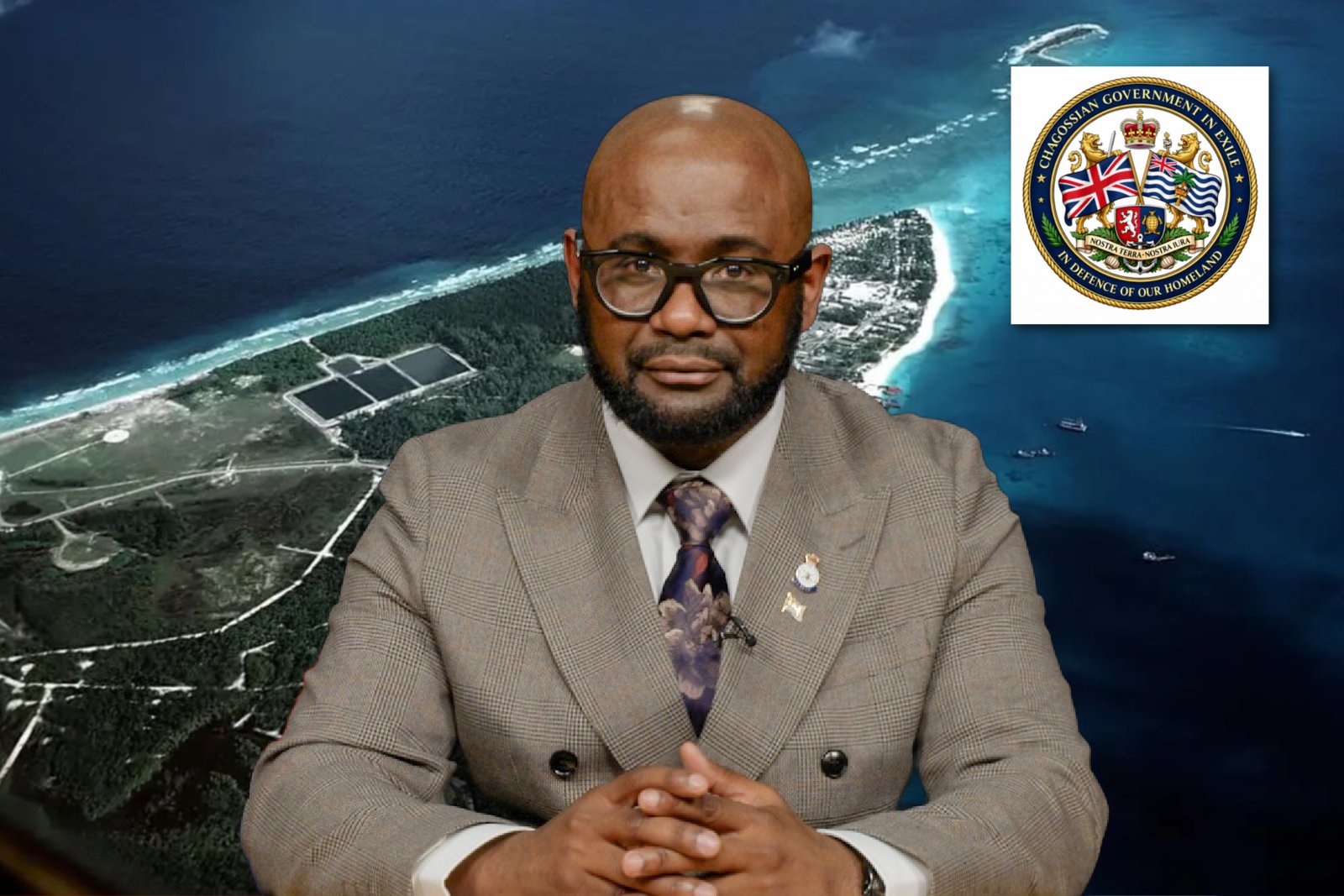
With the legislation that would surrender the British Indian Ocean Territory to Mauritius due for its third reading in the House of Lords tomorrow (Monday), the leader of the Chagossian people has made a direct appeal to the British public to step in before it is too late.
Misley Mandarin, First Minister of the Chagossian Government in Exile, wants people across the United Kingdom to contact members of the House of Lords without delay. His message is blunt: unless every Lord votes the Bill down, Britain risks a choice he describes as both irreversible and deeply damaging.
Should the Bill clear its third reading, control of the Chagos Archipelago would pass to Mauritius. That would bring British sovereignty over a strategically vital overseas territory to an end and lock British taxpayers into payments thought to exceed thirty billion pounds, and possibly reaching thirty five billion pounds, simply to lease back the military base at Diego Garcia.
Critics say the measure has been driven through at speed, without proper scrutiny, without public consent, and without consulting the Chagossians themselves, the very people a previous Labour Government forcibly expelled from their homeland between 1968 and 1973.
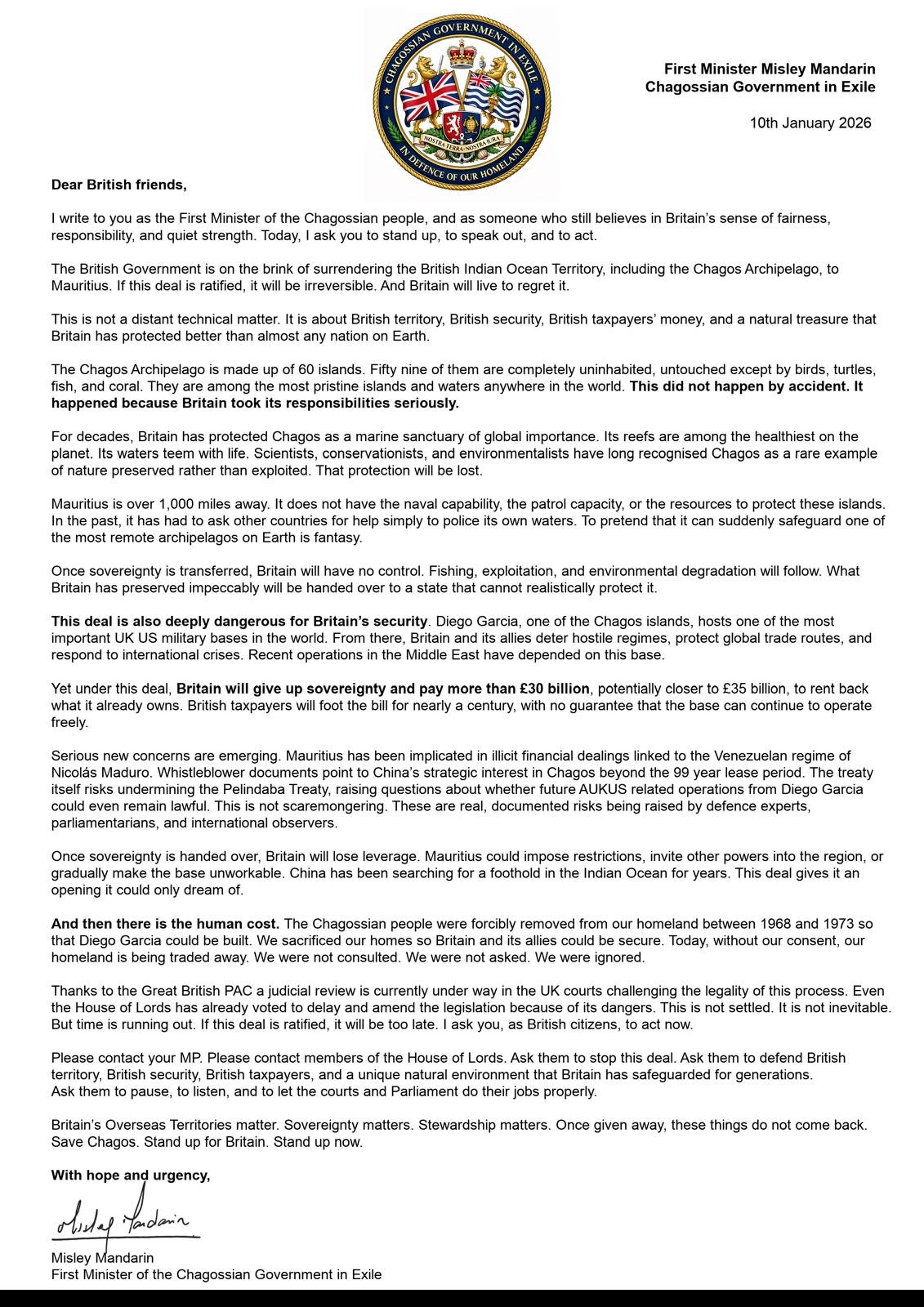
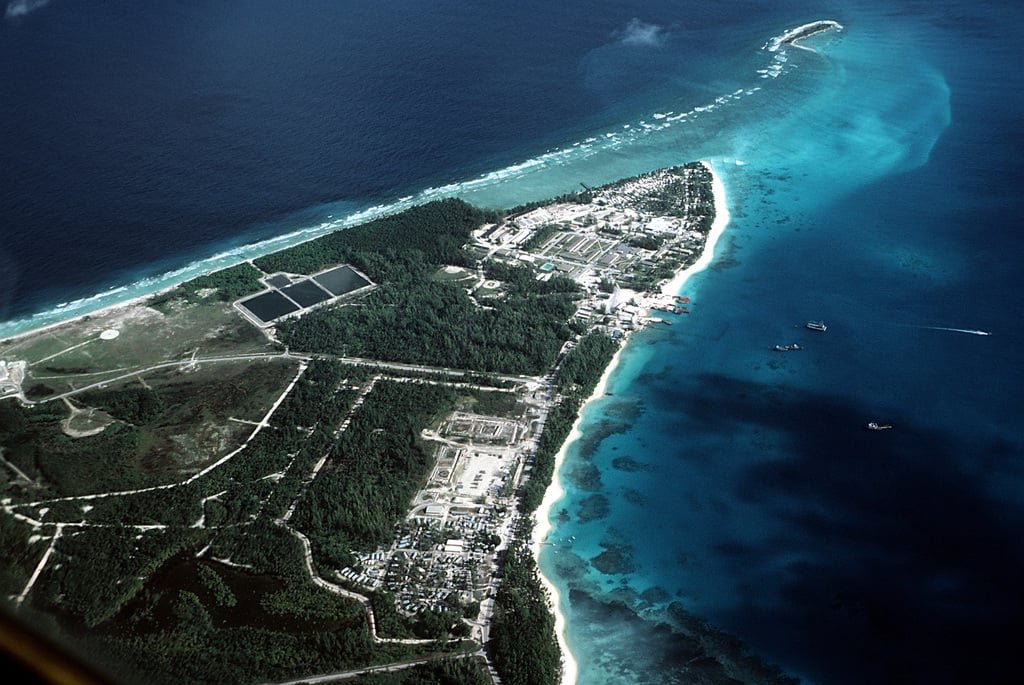
Made up of sixty islands, fifty nine of them uninhabited, the Chagos Archipelago is regarded as one of the most pristine marine environments anywhere on Earth. Environmental specialists caution that reefs and ecosystems sustained by decades of British stewardship could be jeopardised if sovereignty moves to a state without the means to police so remote a region.
A base at the heart of Western deterrence
Security has dominated the argument. Diego Garcia is home to one of the most significant UK-US military bases, pivotal to global deterrence, to safeguarding international trade routes, and to recent operations in the Middle East. The proposed deal would strip Britain of sovereignty and leave it with access only through a long-term lease, sharply weakening its hand.
Defence analysts caution that fresh restrictions might follow, that the terms of access could be reopened, or that rival powers could gain a foothold in the region. China has been pushing to widen its presence across the Indian Ocean, and whistleblower material has fuelled concern about Beijing's long-term strategic designs on Chagos.
The legal and security warnings grow starker still. Defence experts say flatly that there is nowhere else on that side of the planet where the United Kingdom and the United States can base, sustain and protect their submarine fleets and strategic deterrent in the way Diego Garcia allows, a fact that props up Britain's entire global defence posture.
They also flag the Pelindaba Treaty, signed by Mauritius, which sets up a nuclear-weapons-free zone spanning Africa and the surrounding waters. The moment Mauritius gains sovereignty, legal authority over those waters travels with it. Experts warn that Mauritius could then lawfully restrict or bar the transit, presence or support of nuclear-capable submarines and weapons systems through Chagos waters. In principle such curbs could be brought in the day after ratification, putting AUKUS operations, Britain's nuclear deterrent and the long-term future of the base in immediate peril.
A handover voters never approved
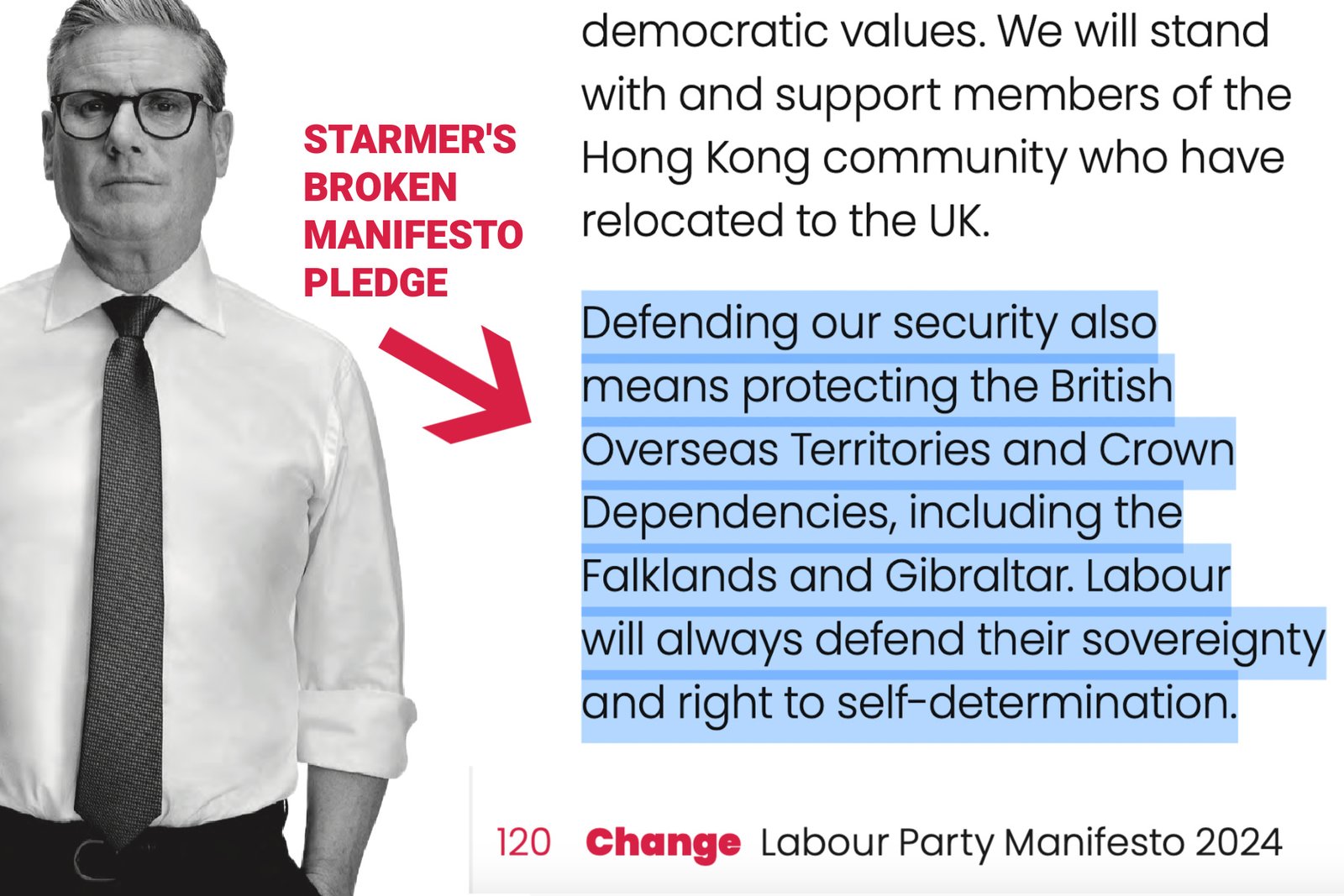
Much of the political heat stems from the fact that the proposed transfer was never put to the electorate. It appeared nowhere in Labour's general election manifesto. Quite the reverse: on page 120 Labour expressly promised to protect Britain's Overseas Territories and to uphold the right to self-determination.
Mandarin and fellow Chagossian representatives say no one consulted them on the deal, and that they wish to stay British. Decisions about their homeland, they argue, are being taken without their consent by governments and institutions in which they have no voice.
Chagossian leaders and their backers go further, arguing that shutting the Chagossian people out of decisions about their own territory amounts to racial discrimination. They note that a largely non-white indigenous population has been brushed aside while two states negotiate sovereignty over its homeland, with no meaningful consultation or representation.
A judicial review backed by the Great British PAC is now before the UK courts, challenging the legality of the process. Peers in the House of Lords have already voted to delay and amend the legislation, pointing to worries over cost, security and constitutional precedent.
With tomorrow's third reading looming, opponents describe the vote as the last realistic chance to stop the deal. They want peers to throw the Bill out altogether and return it to Parliament to be settled properly, with full scrutiny, legal clarity and genuine consultation with the Chagossian people.
“This legislation must be voted down,” Mandarin said. “It needs to return to Parliament, and it needs to be done properly. We must be consulted. Anything less repeats the injustices of the past.”
Campaigners are urging members of the public to email peers directly, warning that once sovereignty changes hands there will be no way to undo it.
As the moment of decision nears, peers face growing pressure to weigh not only the legal and strategic fallout but the moral question too. For those who oppose the deal, tomorrow's vote is no mere procedure. It is historic.