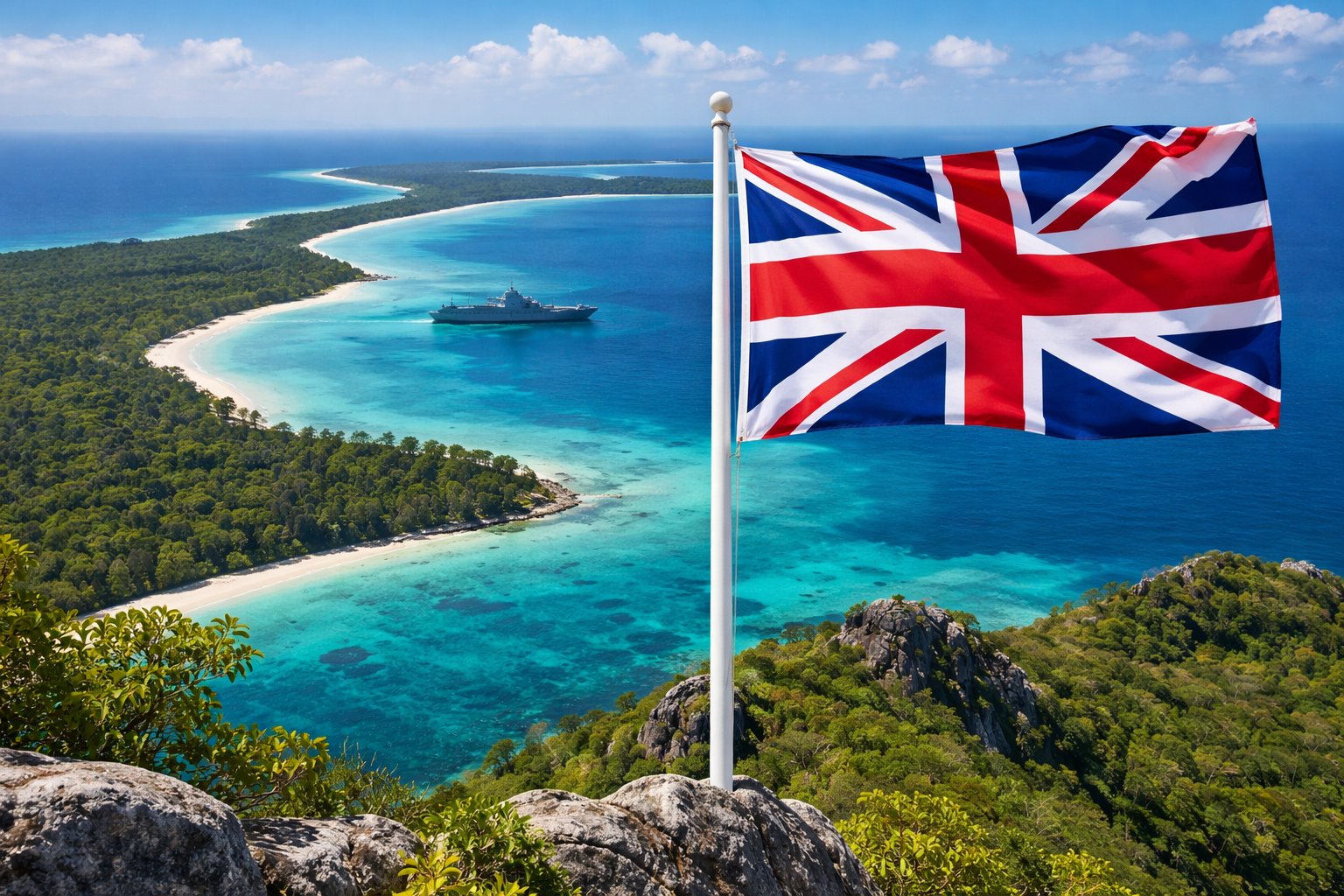
It is a moment many campaigners feared would never come. The drive to hand the Chagos Islands to Mauritius has been stopped in its tracks, halted by a wall of opposition that has grown louder both at home and overseas. For British sovereignty and national security, this is a serious win.
The clearest sign of the retreat is what will be missing from the upcoming King's Speech. We understand the legislation that would have underpinned the deal is not set to appear, an omission that amounts to a decisive pause on a policy that had alarmed people right across the United Kingdom.
Under the proposed arrangement, Britain would have surrendered sovereignty over the Chagos Islands altogether, then leased back the strategically vital island of Diego Garcia for 99 years. Diego Garcia is no ordinary outpost. It remains one of the most important joint UK-US military bases anywhere on earth, central to global security operations, including recent activity tied to tensions involving Iran.
Ministers insisted the deal was the only way to secure the base's long-term future, putting the price tag at £3.5 billion. Those numbers did not go unchallenged. Opposition voices argued the real bill could climb to as much as £35 billion, and a recent court assessment pushed the potential long-term burden closer to £50 billion.
Why the deal collapsed
The decisive blow came from across the Atlantic. The agreement has faltered after US President Donald Trump withdrew his support, reportedly branding the proposal an “act of great stupidity.” Stripped of American backing, ministers have conceded the deal simply cannot go ahead. That has bred real frustration inside government, all the more so because earlier intelligence-level talks had pointed to initial US approval.
The legal and strategic risks have only sharpened the concern. Ministers worry that Mauritius could take the matter to international courts and, in doing so, gain access to the waters around Diego Garcia. That alone could undercut the base's operations, from the deployment of nuclear submarines to maritime patrols, chipping away at a cornerstone of Western defence.
Alarm has been especially acute over the Pelindaba Treaty, which designates Africa a nuclear-weapon-free zone. Mauritius has signed the treaty, and critics warn that handing over sovereignty could allow its provisions to be enforced across the Chagos Islands. In plain terms, that might restrict, or even forbid, the presence, transit or servicing of nuclear-armed or nuclear-powered submarines at Diego Garcia.
Defence analysts warn the knock-on effects would reach far beyond a single base. Constraints of that kind would not only hamper the United Kingdom's ability to operate its submarine fleet in the region, but would also erode the United States' strategic position in the Indian Ocean. Diego Garcia has long been a critical logistics and operations hub, and losing the ability to support nuclear-capable vessels could badly weaken Western deterrence in a region where geopolitical competition is intensifying. There is a further fear that legal challenges layered on top of treaty obligations could leave access and control in permanent doubt, complicating military planning and handing confidence to adversaries.
The parliamentary clock
The timetable in Westminster has piled on the pressure. Should the legislation fail to pass before prorogation, expected between 29 April and 6 May 2026, it falls entirely. The government would then have to reintroduce the Bill in the next session, restarting the whole legislative journey from scratch, debates, scrutiny and likely opposition in both Houses included. For those who have fought the deal, that is a major victory and a real chance to kill the proposal off for good in defence of British sovereignty.
There has been talk that ministers might lean on the Parliament Acts to drive the Bill through without the Lords' consent. That path is anything but simple. It is intricate, drawn out and seldom used, normally demanding that a Bill clear the Commons in two successive sessions. Far from a shortcut, it would drag implementation out further still and offers little hope of rescuing the current proposal.
For Sir Keir Starmer's government, this is another reversal added to a lengthening tally of retreats. Critics spanning the political spectrum, among them senior Conservative figures and Reform UK, have warned all along that the agreement put British sovereignty at risk and gambled with national security.
Our campaign, and the Chagossian cause
That resistance was never confined to Parliament. The Great British PAC has been at the forefront throughout, mounting high-profile campaigns, pursuing legal action and pushing this issue into the national spotlight. We have also stood firmly with the Chagossian people, helping carry their voice to an international audience and supporting the establishment of a Chagossian Government in Exile.
On Monday we are set to publish fresh polling, which we expect to show substantial public opposition to the proposal right across the United Kingdom.
Claire Bullivant, CEO of the Great British PAC, welcomed the rising tide of resistance: “Britain’s sovereignty is not for sale, and the British people know it. This deal was flawed from the start, dangerous in its consequences, and rejected by the public. But beyond that, this deal rides roughshod over the rights of the Chagossian people. They must have a genuine right to self determination and a decisive voice in the future of their homeland. Their cause cannot be ignored or traded away behind closed doors. We will always stand up for our nation, our security, and for the fundamental principle that the people most affected must be heard.”
Our argument has been consistent: the agreement would have loaded needless cost onto taxpayers while leaving critical defence infrastructure exposed to legal and geopolitical uncertainty. Supporters credit our campaigns, legal challenges and advocacy, for both British sovereignty and the Chagossian community, with helping to move the national conversation.
An uncertain future
The wider geopolitical picture has made everything harder. Relations between London and Washington have soured in recent months, not least amid disagreements over the Iran conflict. The United States voiced frustration at Britain's refusal to let its bases be used for initial military strikes, adding strain to an already fragile alliance.
Even now, the government insists it still believes in the deal and may try to revive talks, though the odds look ever longer. With parliamentary time draining away, international support ebbing and legislative obstacles stacking up, the Chagos proposal faces a deeply uncertain future.
For many watching, this is far more than a procedural delay. It is a reaffirmation of Britain's enduring resolve to protect its sovereignty, safeguard its strategic assets, and listen to the will of its people.