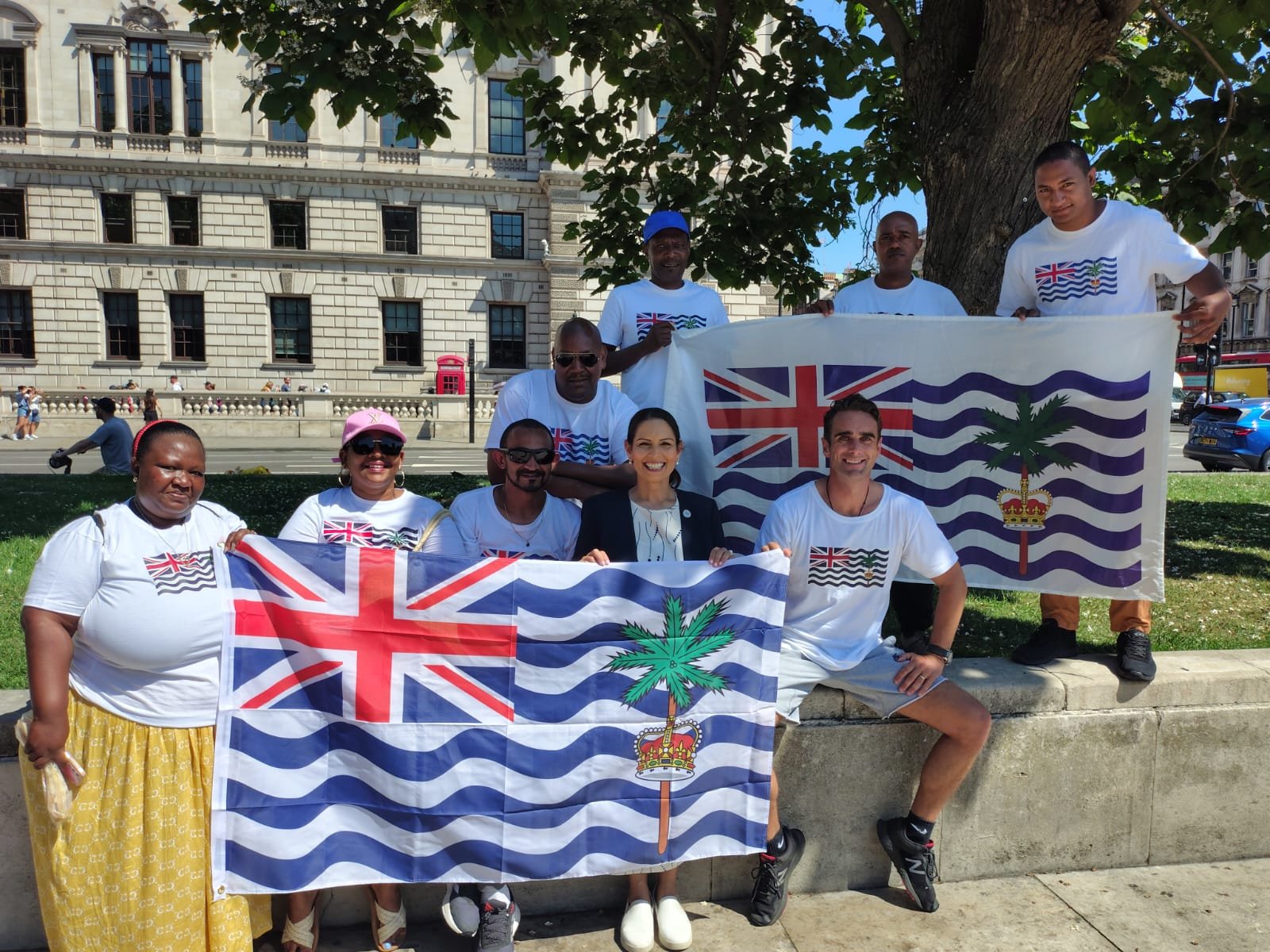
The Government's handling of the Chagos question has spiralled into a fresh crisis, with parliamentarians, Chagossian organisations and policy specialists rounding on the survey now being run by the House of Lords International Relations and Defence Committee. Their verdict is blunt: the exercise is fundamentally compromised.
Shadow Foreign Secretary Priti Patel has branded it a “sham process” and is demanding urgent safeguards. The consultation was supposed to gather “Chagossian views” on the United Kingdom and Mauritius Agreement covering the Chagos Archipelago. Instead it has been condemned as unreliable, insecure and wide open to manipulation.
With allegations of foreign interference, a flawed methodology and the political sidelining of Chagossians all swirling at once, calls to halt the process altogether are growing louder by the day.
The controversy spilled into the open when Conservative Peer the Earl of Leicester used a blistering Lords speech to declare that the survey “cannot be relied on. It is methodologically flawed, structurally careless, open to manipulation and in several aspects dangerously misleading.” His intervention gave a parliamentary voice to objections that Chagossian groups and analysts have raised for some time, namely that the consultation is “not fit for purpose”.
The arithmetic compounds the problem. The Committee must report by 18 December, which leaves a mere twelve working days after the survey closes to sift through what could be thousands of unverified responses. Experts say the timetable on its own makes any genuine scrutiny impossible.
Patel issues a direct warning to the Committee Chair
The political temperature rose further when Shadow Foreign Secretary Priti Patel MP wrote directly to the Committee's Chair, Lord De Mauley, in a letter that is now being passed around Westminster and Chagossian networks alike.
Patel used the letter to attack Ministers for signing the treaty without consulting Chagossians first:
“Thank you for undertaking a process of engagement with the Chagossian community over Labour’s Chagos Surrender Deal. It is shameful and a stain on this Government that they have failed to undertake any meaningful engagement and consultation prior to signing the Treaty and since.”
She called it “outrageous” that Ministers had “outsourced this process to a Select Committee rather than take responsibility themselves,” describing the move as “an appalling approach”.
Patel went on to register “deep concern” at reports that the Mauritian authorities “may be interfering in our democratic processes and Parliament by involving themselves in survey responses,” adding:
“They are using their resources to organise surveys to be completed and responded to, which appears to be an orchestrated effort to manipulate the survey results.”
She pressed Lord De Mauley to “urgently review and investigate” the matter and to “ensure that robust checks are put in place to prevent the survey from being manipulated and subject to foreign interference,” underlining the principle at stake: “There can be no place in our democracy for a coordinated effort of interference from a foreign government.”
It is deeply concerning to see reports that the Mauritian authorities may be interfering in our democratic process. Here is my letter to the International Relations and Defence Committee. pic.twitter.com/tGrS5pA4Na — Priti Patel MP (@pritipatel) December 1, 2025
Patel also drew attention to a glaring gap: the survey contains no question asking Chagossians whether they actually support handing sovereignty to Mauritius or would rather the islands stayed British. She asked whether that omission was deliberate and whether the Committee intends to report views that oppose the agreement at all.
Beyond that, she flagged the punishingly short response window, queried whether late or non-digital submissions would be counted, and passed on feedback from Chagossian communities who “are fully opposed to the transfer of sovereignty” and fear they are being sidelined by both the UK and Mauritian governments.
Her letter set out a string of further worries: resettlement being left entirely in Mauritius's hands, with “no obligation to resettle Chagossians,” the prospect of non-Chagossian nationals settling on the islands, Chagossians having no control over the Trust Fund, the uncertain future of artisanal fishing rights, and the lack of any guaranteed benefit for Chagossians under the proposed economic partnership.
She finished with a damning summary:
“Taken together, Chagossians are being betrayed by this Labour Government that cannot even be bothered to consult and engage directly with them. This surrender of sovereignty is not in their interests or the British national interest.”
Allegations of Mauritian interference intensify
During last week's Lords debate, the Earl of Leicester said he had seen “video evidence and direct testimonials” indicating that people connected to the Mauritian Government were helping or even completing survey responses on behalf of Chagossians who cannot read or write English. According to him, some Chagossians opposed to the Agreement believe they have ended up recorded as supporters of it, which he characterised as foreign interference in a UK parliamentary process.
He also read out a text message from a senior Mauritian figure claiming that political actors were “planning for civil unrest” if the deal were to collapse and previously promised tax cuts had to be reversed. Mauritian officials have made no public response to these claims.
A platform “open to anyone, anywhere”
The decision to run the survey on Microsoft Forms has drawn heavy fire. Experts point out that the platform offers none of the basic protections such an exercise demands:
- no identity verification
- no protection against duplicate submissions
- no way to confirm whether a respondent is actually Chagossian
- no meaningful security features
- no barriers against automated or coordinated entries
One analyst put it bluntly, calling the tool “so vulnerable even a school politics club could manipulate it”.
Errors, omissions and “misleading” framing
Critics have also turned on the survey's own introductory wording, which tells respondents that legislation implementing the Agreement is “currently being debated” while failing to spell out that the treaty still has to be ratified and could yet be rejected by Parliament.
Both Patel and the Earl of Leicester warned that this framing risks leaving people with the impression that the deal is already a done deal.
Confidence has been further dented by grammatical errors and duplicated sentences, which critics say betray a rushed and poorly built instrument. Whole areas central to Chagossian life are absent altogether, including questions on nationality, BIOT citizenship, descendant rights, reparations and long-term legal security.
Shutting out non-English speakers
While the questions are translated into Creole and French, every answer has to be written in English. For many Chagossians living in Mauritius and the Seychelles, that is simply not realistic. As the Earl of Leicester told peers: “A consultation that excludes the non English speaking majority of the diaspora cannot claim to speak for the Chagossian people.”
Political fallout and calls for suspension
From our own campaign, Claire Bullivant, CEO of Great British PAC, did not mince her words, calling the exercise “a complete and unmistakable sham” and warning that if Mauritian state bodies really are helping to gather responses then the consultation amounts to “blatant foreign interference in a British democratic process.” She accused Labour Ministers of “refusing to answer questions” and of handing the whole thing to a Committee “despite the stakes for sovereignty and national security”.
Bullivant added that Chagossians feel “betrayed,” pointing to fears that Mauritius would end up controlling resettlement, the Trust Fund, marine protections and every economic decision under the Agreement.
A survey “irredeemably compromised”
Analysts, Peers and community groups are now using the same vocabulary to describe the survey: “insecure,” “misleading” and “irredeemably compromised”. The demands stacking up include:
- immediate suspension of the consultation
- an investigation into the alleged foreign interference
- a new, secure and verifiable process to replace it
- genuine co-design with Chagossians
- full linguistic accessibility
- transparent parliamentary oversight
As one Chagossian advocate said: “We are owed honesty, rigour and respect. This survey delivers none of those things.”
The road ahead
Parliament now faces a choice: plough on regardless of the mounting objections, or tear the process down and rebuild it from scratch.
In the Lords, the Earl of Leicester posed the question now ringing around Westminster: “How much weight will the Government attach to this survey? If it is not worth the paper it is written on, will the Minister undertake a proper referendum among the Chagossians and their diaspora?”
With the allegations multiplying, the political stakes climbing and Chagossian trust draining away, whatever Parliament does next will decide whether this consultation can recover any legitimacy at all, or whether it goes down as one of the most contested and controversial in recent parliamentary memory.
And with rumours that Hollywood is already circling a feature film about the whole saga, every lord and minister might pause to consider how they would like their part in this chapter to be remembered.